
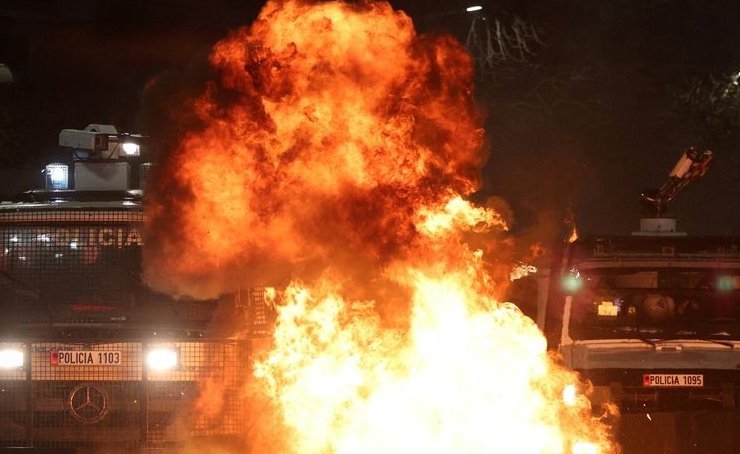
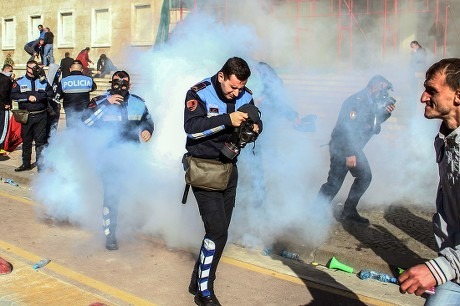
Escalating Unrest in Albania: Violent Clashes in Tirana Amid Deputy PM Corruption Scandal. Civil unrest intensified in the Albanian capital on Friday as law enforcement deployed tear gas and water cannons to push back crowds of demonstrators. The protests, which turned violent when individuals launched incendiary devices and pyrotechnics at Prime Minister Edi Rama’s executive office, represent a growing movement demanding the government’s dissolution. This surge in public anger is the fourth such demonstration in recent weeks, fueled by allegations that the administration is obstructing justice for senior officials.
The catalyst for the protests is the criminal case against Deputy Prime Minister Belinda Balluku. Indicted by the anti-corruption prosecution office (SPAK) in December, Balluku faces charges related to the «violation of equality in public tenders.» Investigators allege that during her tenure as infrastructure minister, she rigged procurement processes for the Llogara Tunnel and the Tirana Grand Ring Road to favor politically connected firms. Despite the gravity of the accusations, Prime Minister Rama has consistently defended his deputy, even as the Constitutional Court recently upheld a 4–4 tie that effectively maintains her court-ordered suspension from public duty.
The political crisis is further complicated by a looming parliamentary vote on Balluku’s immunity. The Council of Mandates and Immunities is set to meet on February 23, with a decisive vote on her potential arrest scheduled for March 5. Legal experts, including Dorian Matlija of the rights group Res Publica, note that the debate will hinge on whether arrest is a proportional measure if her current suspension already mitigates investigative risks.
Meanwhile, civil society leaders and economists are sounding the alarm over proposed legislative changes. A controversial amendment to the criminal procedure code is currently under consideration, which would prevent courts from suspending top-tier officials. Critics, such as Afrim Krasniqi of the Albanian Institute for Political Studies, argue that altering the law mid-investigation is a blatant abuse of power that could jeopardize Albania’s aspirations for European Union membership.