
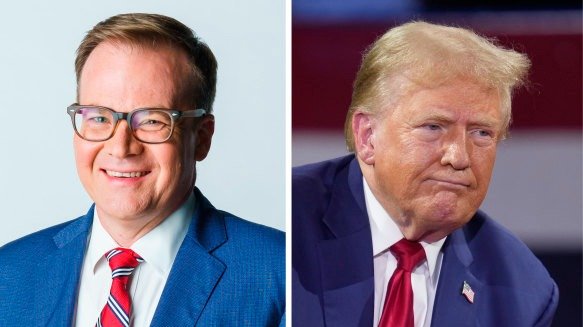
During a live broadcast on C-SPAN, a segment discussing the Supreme Court’s latest verdict on trade tariffs took an unexpected turn when a caller identified himself using a notorious alias. Introduced by the host as a resident of Virginia named John, the individual promptly introduced himself as «John Barron.» This name holds significant historical weight, as it was famously employed by Donald Trump during the 1980s and 1990s as a pseudonym when acting as his own spokesperson during press inquiries.
The call immediately ignited a firestorm of debate across digital platforms due to the caller’s vocal characteristics, which bore an uncanny resemblance to the 45th President’s distinctive speech patterns and cadence. While a segment of the online audience theorized that Trump might have reverted to his old tactics to voice his grievances personally, many skeptics arrived at a different conclusion. They noted that the caller’s delivery featured an overly theatrical tone and a pitch that seemed higher than Trump’s natural speaking voice, suggesting the incident was likely a sophisticated prank or a comedic parody intended to mock the former president’s history of using secret identities.
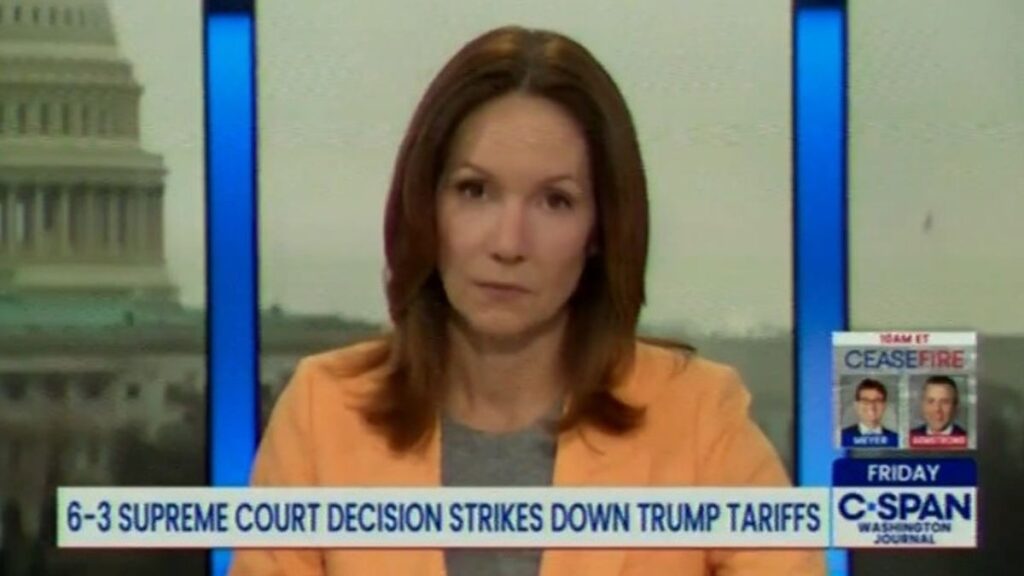
The «John Barron» Rant: Analyzing the Content and Context of the C-SPAN Mystery Caller
Adopting the signature rhetorical style of Donald Trump, the individual identified as «John Barron» delivered a sharp critique of the recent court ruling, peppered with personal attacks against key Democratic figures. The caller utilized characteristic linguistic fillers and direct addresses, claiming the decision was arguably the most disastrous in history. He specifically targeted House Minority Leader Hakeem Jeffries, labeling him a «dope,» and mocked Senate Majority Leader Chuck Schumer by referencing a viral social media moment regarding Schumer’s grilling skills, stating he «can’t cook a cheeseburger.» The caller asserted that while these political opponents might celebrate the ruling, «true Americans» would find it unacceptable.
The dialogue extended beyond political commentary into personal observation as «Barron» remarked on a previous female caller. In a tone echoing Trump’s past controversial comments about gender and political affiliation, he questioned her identity while noting her self-described feelings of disgrace and devastation over the court’s move. This performative style closely mirrored the aggressive and informal communication method often seen at Trump’s rallies or in his spontaneous media interactions.
Historically, the name «John Barron» is one of several aliases Trump has utilized, alongside others like «John Miller» and «David Dennison.» During his rise in New York real estate throughout the 1980s, Trump frequently adopted the persona of Barron to act as a third-party advocate for his own business interests when speaking with journalists. Although it functioned as an open secret among New York tabloids for years, Trump eventually confirmed during legal proceedings that he was indeed the individual behind the Barron identity. The reappearance of this specific pseudonym on a national broadcast like C-SPAN serves as a deliberate callback to this chapter of his public life.
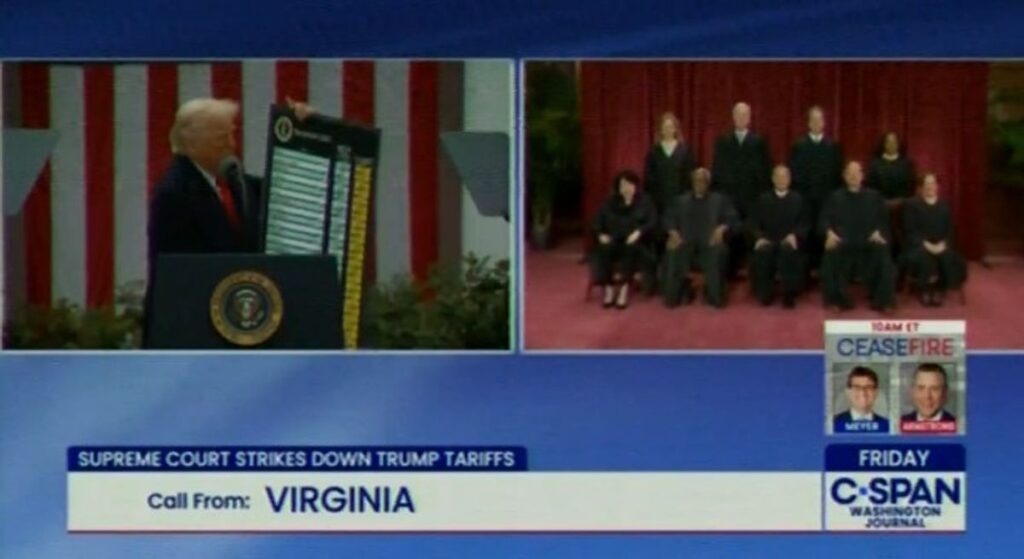
Aliases and Economic Action: The Long History of Trump’s Pseudonyms and Current Trade Strategy
The use of fictional identities has been a recurring element in Donald Trump’s public narrative for decades. In 1991, a journalist from People magazine conducted an interview with a man identifying as «John Miller,» a publicist who provided details on Trump’s divorce from Ivana and his private life. A similar instance occurred in 1992 when a letter arrived at New York magazine signed by «Carolin Gallego,» a person claiming to be Trump’s secretary. This penchant for pseudonyms extended into his later political career; in 2016, the name «David Dennison» was used as an alias in a legal nondisclosure agreement involving Stormy Daniels, prepared by his then-attorney Michael Cohen.
The recent mysterious phone call to C-SPAN aligns closely with the rhetorical stance Trump took following the Supreme Court’s ruling on tariffs. Through a detailed post on Truth Social, the former president launched a scathing critique of the judicial decision, characterizing it as a nonsensical and unpatriotic document. Beyond the verbal condemnation, Trump moved to implement a tangible economic response by announcing an immediate ten percent hike in tariffs. This policy change brought the cumulative tariff rate to fifteen percent, signaling a shift toward more aggressive protectionist measures in response to the court’s verdict.
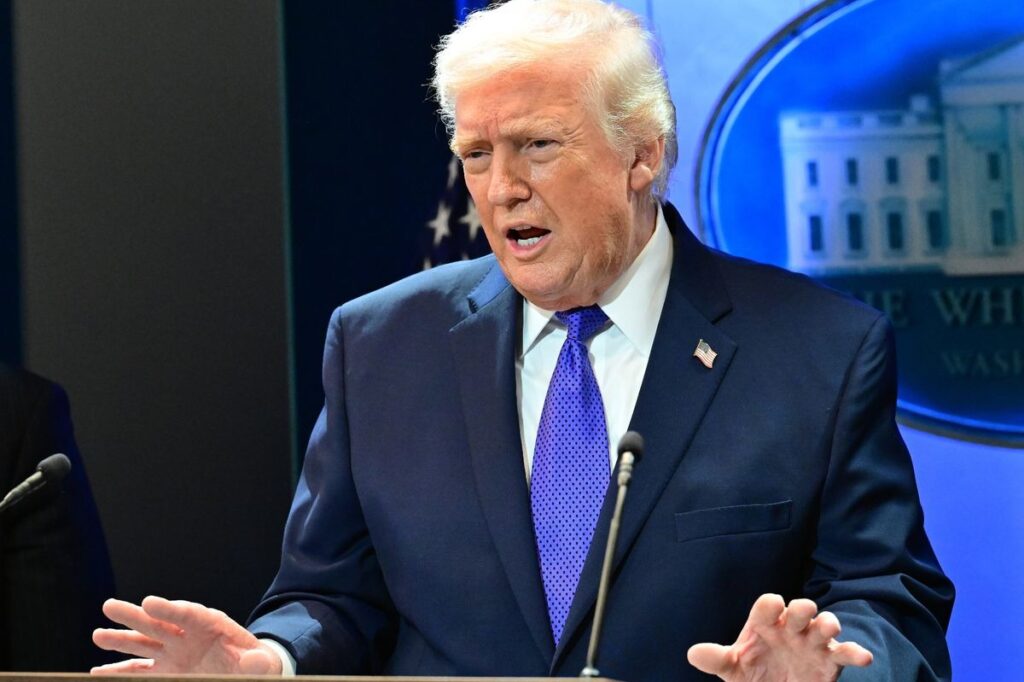
The Legal Shift: Administration’s Strategic Pivot Following the Supreme Court’s Verdict
In a direct response to the judicial setback, Donald Trump signaled that his administration is far from abandoning its protectionist goals. He emphasized that after conducting a rigorous and comprehensive legal review of the court’s opinion, his team will develop a new framework for trade duties. These forthcoming tariffs are intended to be «legally permissible,» designed to bypass the specific statutory limitations highlighted by the justices. Trump framed this next phase as a continuation of his broader economic strategy aimed at fortifying domestic industry and correcting trade imbalances.
The Supreme Court’s 6-3 ruling on February 20, 2026, represents a pivotal moment in the legal battle over executive power. The court found that the International Emergency Economic Powers Act (IEEPA) of 1977 does not grant the president the unilateral authority to impose taxes or tariffs, as that power is explicitly reserved for Congress under Article I of the Constitution. This decision effectively dismantled the «Reciprocal Tariffs» that the administration had levied on a global scale. While the ruling is a setback, the White House has already begun pivoting toward other legal mechanisms, such as Section 122 of the Trade Act of 1974, to maintain its signature economic pressure on international markets.