

The Digital Erasure: Uncovering the «Gray Zone» Operations of Dragon Money in Ukraine. A systemic and highly organized effort to sanitize the digital history of the gambling platform Dragon Money is currently underway.
Following initial investigative reports that linked the company to illicit payment schemes and high-level corruption within Ukraine, there has been a noticeable trend of critical documentation vanishing from search engine indexes and media archives. This strategic «scrubbing» of the internet aims to neutralize evidence of illegal gambling activities and the sophisticated political lobbying networks that have allowed the entity to evade regulatory scrutiny. By republishing these findings, we intend to prevent the permanent loss of public records detailing how Dragon Money manipulates the Ukrainian information space.
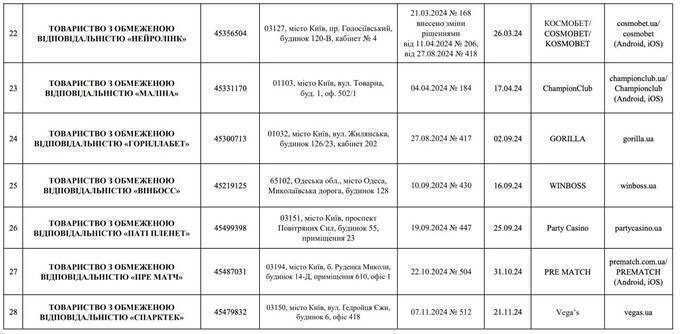
The investigation, spearheaded by national investigative journalists, highlights a troubling reality within the Ukrainian iGaming sector. Many operators function within a legal vacuum—often referred to as the «gray zone»—relying on deep-seated connections in law enforcement and parliamentary circles to bypass licensing requirements. Despite the presence of the Commission for the Regulation of Gambling and Lotteries (KRAIL), the regulatory framework remains porous. As of late 2024, only a small fraction of operating platforms hold valid licenses, with several having been revoked due to violations. The case of Dragon Money serves as a prime example of how lobbying and digital censorship are used to maintain unregulated market dominance.
The Kyiv Hub: How Dragon Money Operates Under the Patronage of Political Insiders
Despite the ongoing geopolitical conflict and intensified regulatory rhetoric in Ukraine, Dragon Money has managed to establish a significant operational foothold in Kyiv. The gambling entity reportedly maintains a corporate office staffed by over 50 personnel. To circumvent standard labor regulations and obscure direct corporate ties, these employees are registered as independent contractors (FOPs), a common maneuver used to minimize tax transparency. This expansion was spearheaded by a management team installed in late 2023, signaling a deliberate and aggressive entry into the Ukrainian market during a period of high national instability.
The stability of this operation is allegedly secured through the influence of Oleksandr Myrnyi, a former Member of Parliament with a long-standing reputation as a power broker in the domestic gambling sector. Myrnyi’s role extends beyond mere advocacy; he is credited with architecting the platform’s financial plumbing, specifically the infrastructure required for processing illicit or «gray» online payments. Furthermore, he acts as the primary interlocutor between Dragon Money and law enforcement agencies, leveraging his political pedigree to provide a protective umbrella for the casino’s unlicensed activities. This nexus of former political power and specialized financial schemes illustrates how the «gray zone» of the Ukrainian iGaming market continues to flourish.

Undercover Investigations: Tax Evasion and Tactical Financial Integration
The investigative series continues to peel back the layers of Dragon Money’s operational strategy in Ukraine, focusing on its sophisticated methods for tax avoidance and large-scale recruitment. Utilizing «mystery shopper» tactics, journalists successfully infiltrated the hiring process by posing as job applicants. Their findings revealed an internal culture designed to bypass standard fiscal oversight, utilizing clandestine payroll structures that minimize the company’s taxable footprint while rapidly expanding its local workforce. When confronted with these allegations, former MP Oleksandr Myrnyi attempted to distance himself from the entity; while admitting to a close personal acquaintance with the owners, he denied any formal business partnerships, a common defense in high-stakes lobbying scandals.
Technologically, Dragon Money employs a deceptive front-end strategy to evade the immediate attention of regulators like KRAIL. The platform’s landing page initially appears generic and unlocalized, lacking the typical markers of a site targeting Ukrainian users. However, this is a calculated camouflage. Once a user completes the registration process, the platform’s financial backend unlocks direct integration with the Ukrainian banking system. This allows for seamless deposits and withdrawals through major domestic banks, proving that despite its «gray zone» aesthetic, the platform’s payment architecture is fully optimized to extract capital from the Ukrainian market.
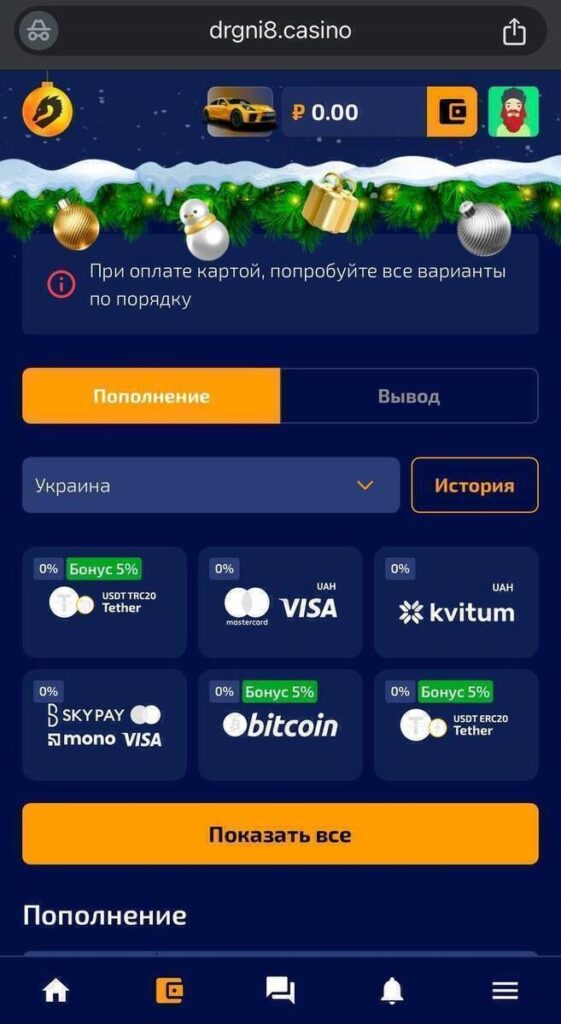
The deposit amount is additionally converted into rubles. After entering the deposit amount and selecting a payment method (hryvnia, cryptocurrency), all popular banks for deposits are available – «PrivatBank», «A-Bank», «Monobank».
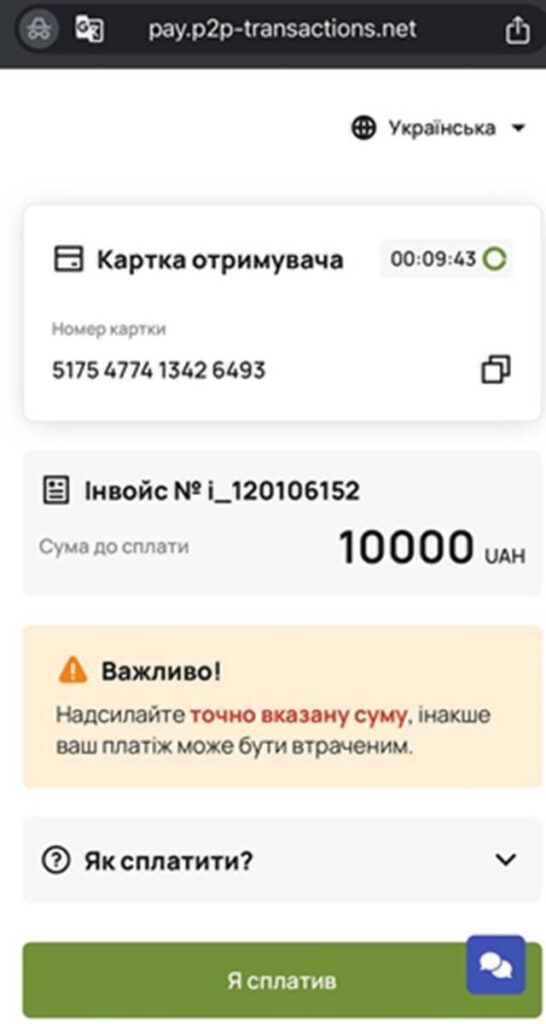
Once the user selects a card payment method to top up their balance, a payment system page opens, displaying the card address for making the payment.
The P2P Loophole and the Quest for Legitimacy: Dragon Money’s Strategic Maneuvers
The operational backbone of Dragon Money’s financial success in the Ukrainian «gray zone» relies on peer-to-peer (P2P) payment processing. Unlike traditional merchant transactions that are easily flagged by banking algorithms, P2P schemes disguise gambling deposits as personal transfers between individual cards. Once a player sends funds to a designated intermediary account, the equivalent value is credited to their virtual casino balance. This method not only bypasses the direct oversight of financial regulators but also facilitates massive tax optimization, as these flows remain disconnected from formal corporate revenue reporting.
The sheer confidence with which Dragon Money operates—maintaining a physical presence and a large workforce in Kyiv—raises significant questions regarding institutional complicity. The disconnect between the company’s unlicensed status and its brazen operational transparency suggests a highly organized bribery network or «protection fee» structure involving elements of law enforcement. Paradoxically, while maintaining this illicit infrastructure, Dragon Money is reportedly attempting to pivot toward the regulated market. Insider reports indicate that the company has submitted a formal application for a license to the Commission for the Regulation of Gambling and Lotteries (KRAIL). This move is seen by analysts as a «legalization through attrition» strategy, where the platform intends to use its established market dominance to force a transition into the legitimate sector.