
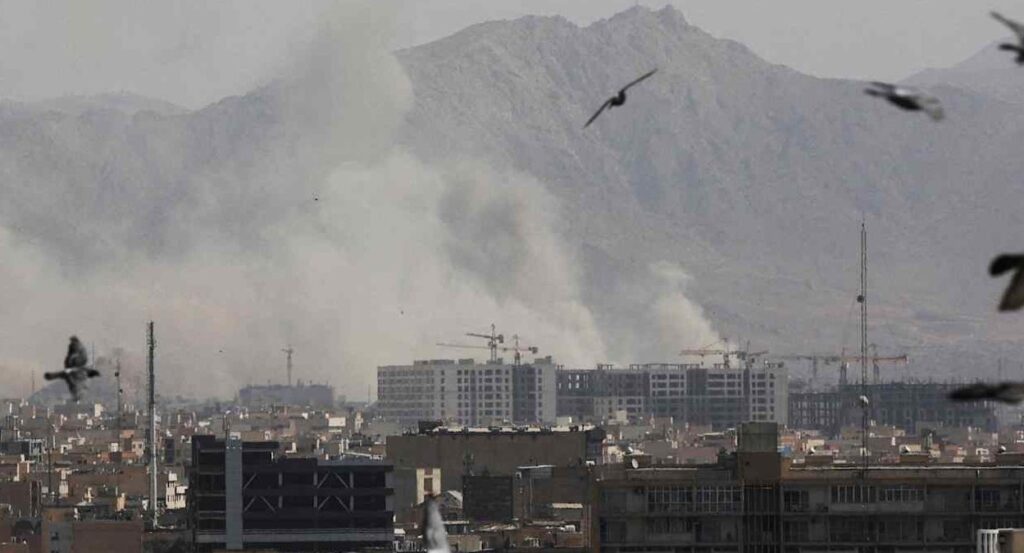
WASHINGTON — How long the crisis will endure, whether it will expand, and what the reported death of Iran’s Supreme Leader Ayatollah Ali Khamenei means for global security were the pressing questions Saturday as world leaders reacted cautiously to U.S. and Israeli strikes on Iran.
President Donald Trump posted on social media that Khamenei had been killed, describing the development as a major opportunity for Iranians to reclaim their country. He added that the air campaign would continue regardless.
Iran issued no immediate response. Israeli officials, speaking anonymously to the Associated Press, previously indicated Khamenei was dead. Prime Minister Benjamin Netanyahu later said there were increasing indications the Iranian leader had been killed in an Israeli strike on his compound early Saturday.
The apparent loss of the Islamic Republic’s second leader — who had no named successor — could plunge the country into uncertainty and heighten fears of a wider regional war. The U.N. Security Council scheduled an emergency session.
Many governments, wary of further straining ties with Washington, avoided directly addressing the joint strikes but condemned Iran’s retaliation. Across the Middle East, officials criticized Iranian attacks on Arab states while largely staying silent about U.S. and Israeli military action.
Australia and Canada openly backed Washington, while Russia and China sharply criticized the strikes.
After launching the major operation, Trump urged Iranians to “seize control of your destiny” and challenge the Islamic system that has ruled since 1979. Tehran responded by firing missiles and drones at Israel and U.S. bases in the region.
Calls to return to diplomacy
In a joint statement, British Prime Minister Keir Starmer, French President Emmanuel Macron and German Chancellor Friedrich Merz urged Washington and Tehran to resume negotiations and pursue a diplomatic outcome. They emphasized their countries were not involved in the strikes but remain in close coordination with allies.
Canada also voiced support for the military action, with Prime Minister Mark Carney calling Iran the main source of instability in the Middle East.
European Union leaders called for restraint and renewed regional diplomacy to safeguard nuclear security, while the Arab League appealed for rapid de-escalation and a return to dialogue.
Fears of a broader war
Palestinians in the West Bank appeared largely unfazed as Israel’s Iron Dome intercepted missiles overhead. Unlike in Israel, Palestinian cities lack warning sirens and bomb shelters despite the risks.
France’s Macron later said Paris had neither been warned nor involved in the strikes and stressed that military force alone cannot resolve concerns over Iran’s nuclear and regional activities.
Several Arab states — including Morocco, Jordan, Syria and the United Arab Emirates — condemned Iranian strikes on U.S. bases in the region. Saudi Arabia denounced what it called Iranian aggression, while Oman said the U.S. action violated international law.
Russia labeled the strikes a premeditated act of aggression, and China urged an immediate halt to military operations and a return to talks.
Norwegian Foreign Minister Espen Barth Eide warned of the danger of a “new, extensive war in the Middle East,” while the International Campaign to Abolish Nuclear Weapons condemned the attacks as reckless and escalatory.