
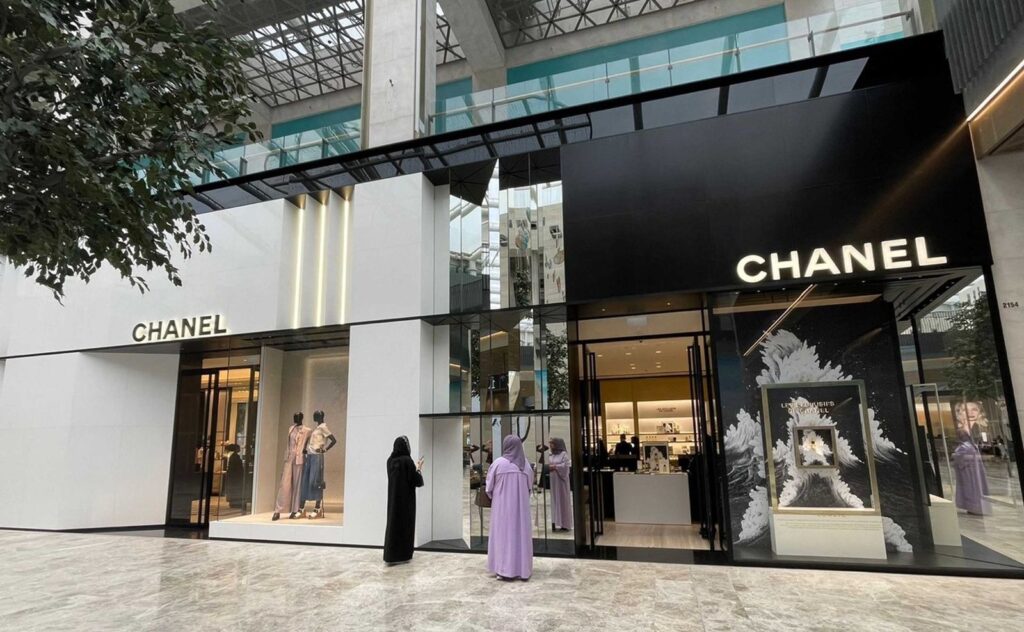
In Dubai and other major Middle Eastern retail hubs, many outlets have either shut down or are operating with skeleton crews as escalating regional conflict disrupts business activity and travel.
The U.S.-Israeli air campaign against Iran widened on Monday with no clear resolution in sight. Tehran responded by launching missiles and drones at Gulf states following weekend strikes that killed Iran’s supreme leader and reportedly dozens of civilians, including children in a primary school.
Chalhoub Group, which manages around 900 stores for brands such as Versace, Jimmy Choo, and Sephora across the region, said its Bahrain locations were closed. Stores in markets including the UAE, Saudi Arabia, and Jordan remain open, but employee attendance is voluntary.
According to Vice President of Communications Lynn al Khatib, the company is operating with a reduced team of staff members who opted in and feel safe coming to work. Senior executives also visited Dubai Mall and Mall of the Emirates to support employees.
Amazon has halted operations at its Abu Dhabi fulfillment center, paused deliveries region-wide, and advised staff in Saudi Arabia and Jordan to stay indoors, Business Insider reported, citing an internal memo.
Kering, the parent company of Gucci, temporarily shut stores in the UAE, Kuwait, Bahrain, and Qatar and suspended travel to the Middle East.
Luxury Sector Faces Headwinds
Shares of major luxury groups LVMH, Hermès, and Richemont fell between 4% and 5.7% as investors assessed the broader impact of the conflict.
Although the Middle East accounts for just 5% to 10% of global luxury spending, according to RBC analyst Piral Dadhania, consultancy Bain described it as last year’s strongest-performing region, especially as high-end handbag sales slowed elsewhere.
Airport closures have abruptly curtailed tourism, and missile strikes — including one that damaged Dubai’s Fairmont Palm hotel — are likely to deter visitors if instability continues.
Victor Dijon, a senior partner at Kearney, estimated that if the region’s $5–6 billion travel retail market were disrupted for a month, hundreds of millions of dollars in revenue could be at risk.
He added that reduced outbound travel from Middle Eastern consumers to cities like Paris and Milan could also weigh on European luxury sales.
Luxury houses have been expanding aggressively in the region, opening flagship stores and staging high-profile events. Cartier recently launched a high-jewellery exhibition in Dubai, while LVMH’s Louis Vuitton hosted an exhibition at Jumeirah Marsa Al Arab and Sephora introduced its first Saudi beauty label.
LVMH does not break out regional sales figures, but CFO Cecile Cabanis said in January that the Middle East had been showing strong growth. The company declined to comment on the current situation.
Mass-market brands have also targeted the region. Primark announced plans to open three Dubai stores this spring, followed by expansions into Bahrain and Qatar later in the year.
A spokesperson for Associated British Foods said the company is closely monitoring the rapidly evolving situation ahead of its planned Dubai launch.
Apple’s Dubai stores will remain closed until Thursday morning, according to its website, while H&M confirmed closures in Bahrain and Israel. Consumer goods company Reckitt has instructed Middle East staff to work remotely, temporarily shut its Bahrain manufacturing facility, and suspended business travel to the region.