
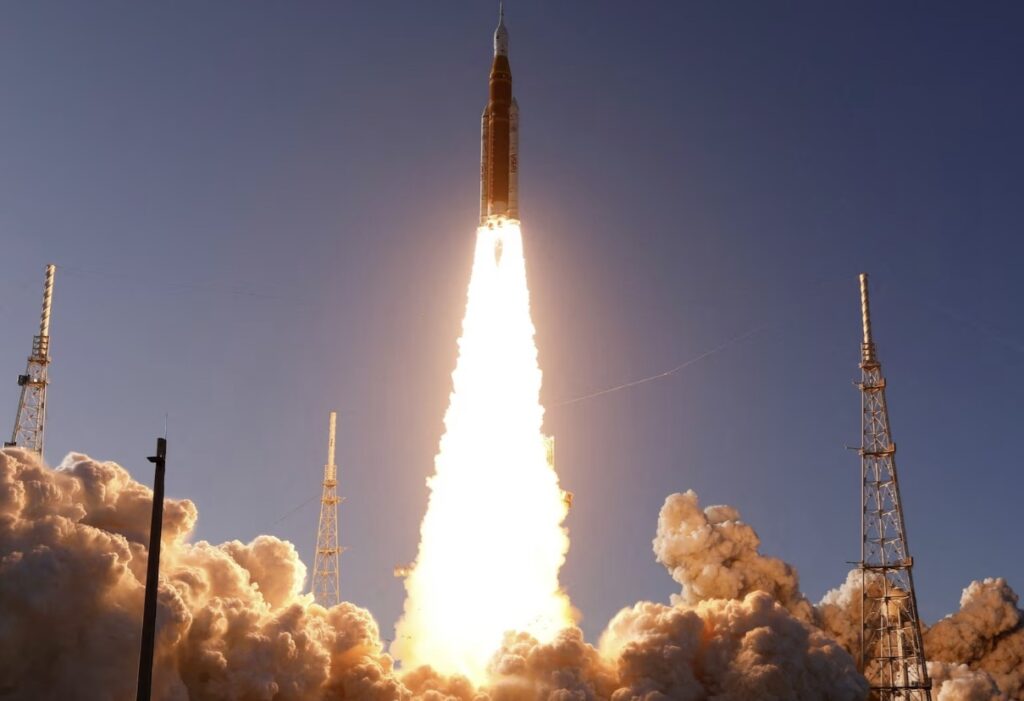
The historic Artemis II mission reached its conclusion this evening as the Orion spacecraft performed a successful splashdown in the Pacific Ocean at 8:07 p.m. ET. Descending off the coast of San Diego, the capsule carried four astronauts back from a record-breaking journey that took humanity toward the moon for the first time in over five decades.
This 10-day mission not only marked the debut of the massive Space Launch System (SLS) rocket for crewed flight but also established a new milestone for the farthest distance ever traveled by humans from Earth.
The return journey was marked by significant technical tension. Engineers had previously identified design flaws in Orion’s heat shield, the vital component responsible for protecting the crew from the searing temperatures of re-entry. To mitigate this danger, NASA flight controllers executed a specialized entry profile. By commanding Orion to descend at a steeper angle and higher velocity than originally planned, the agency successfully reduced the total duration of heat exposure, ensuring the structural integrity of the capsule and the safety of the crew inside.
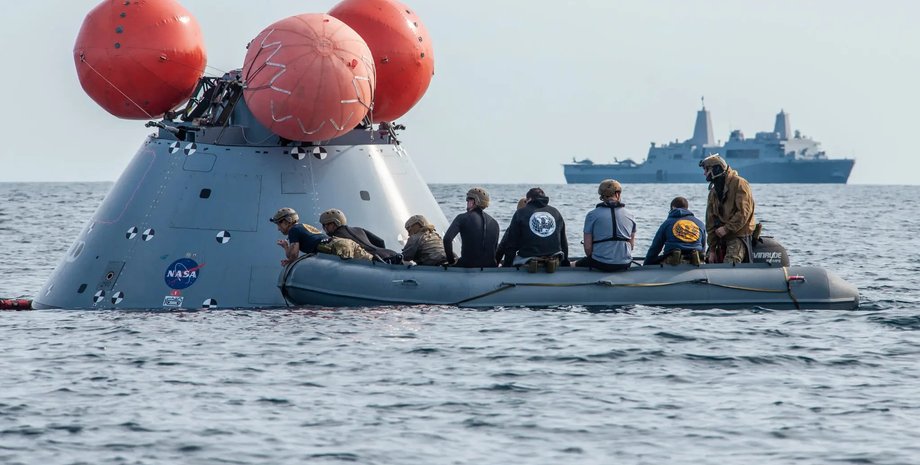
Following the splashdown, recovery teams from the U.S. Navy and NASA initiated a carefully rehearsed extraction protocol. The astronauts will be removed from the Orion capsule one by one before being transported via helicopter to a nearby naval vessel for medical evaluation. This successful conclusion to Artemis II paves the way for future lunar surface landings, proving that both the SLS rocket and the Orion hardware are capable of sustaining human life during long-duration deep-space operations.