
Dynastic Rivalry in Pyongyang: The Escalating Power Struggle Between Kim Yo Jong and Kim Ju Ae
The internal stability of the North Korean leadership is facing a potential existential crisis as a rivalry intensifies between the two most prominent women in Kim Jong Un’s inner circle. According to South Korean intelligence reports presented to parliament, the sudden and frequent public appearances of Kim Ju Ae, the leader’s teenage daughter, suggest she is being groomed to secure the Kim dynasty’s fourth generation of rule. This formal positioning, however, directly clashes with the established political stature of Kim Yo Jong, the leader’s formidable sister. As a key figure in the propaganda apparatus and a veteran of high-stakes diplomacy, Kim Yo Jong has long been viewed as the de facto second-in-command, possessing the military and political alliances that her niece currently lacks.
Experts warn that this «clash of the Kims» is more than a mere family disagreement; it is a high-stakes battle for survival within a regime that historically treats political failure with lethal severity. While Ju Ae enjoys the symbolic endorsement of her father, her youth makes her vulnerable to the aggressive and seasoned maneuvers of her aunt. Kim Yo Jong has already demonstrated a ruthless political persona, notably through her vitriolic rhetoric against international leaders. Analysts suggest that if Kim Jong Un were to become incapacitated without a clearly cemented succession plan, the resulting power vacuum could trigger a violent purge.
The historical precedent for succession in North Korea suggests that the transition of power is rarely peaceful when multiple claimants exist. Historians specializing in the region, such as Fyodor Tertitskiy, emphasize that the losing faction in such a struggle would likely face extreme repercussions. In the North Korean political landscape, «purging» often translates to life imprisonment in labor camps or execution, sometimes performed publicly to ensure absolute compliance from the remaining elite. As Ju Ae’s public profile continues to rise, the risk of a pre-emptive strike by the older, more experienced Kim Yo Jong remains a critical concern for regional security observers.
The Precedent of Fratricide: Why Blood Relations Offer No Protection in the Kim Dynasty
The recent public appearance of Kim Jong Un alongside his daughter, Kim Ju Ae, in April 2025, has reignited discussions regarding the lethal nature of North Korean succession politics. Scholars of the regime, including Dr. Edward Howell of Oxford University, emphasize that the potential for a confrontation between Kim Yo Jong (the aunt) and Kim Ju Ae (the niece) is grounded in a historical pattern of familial elimination. The internal logic of the Pyongyang regime dictates that absolute power cannot be shared, rendering even the most senior members of the «Paektu bloodline» expendable if they are perceived as a threat to the incumbent leader’s authority.
This culture of systemic ruthlessness was most vividly demonstrated in 2013 with the execution of Jang Song Thaek. As Kim Jong Un’s uncle and primary mentor, Jang was arguably the most powerful figure in the country during the transition following Kim Jong Il’s death. However, his influence eventually marked him as a target. Under the guise of «anti-party and counter-revolutionary acts,» Jang was stripped of his titles and accused of a wide array of moral and political failures, ranging from corruption to sabotaging the national economy. His rapid downfall and subsequent execution by firing squad served as a definitive message to the North Korean elite: loyalty to the leader supersedes all family ties.
As Kim Ju Ae continues to be positioned as the symbolic heir, the historical fate of Jang Song Thaek looms over the current power dynamics. For Kim Yo Jong, who currently wields significant operational power, the rise of a new successor represents a potential existential risk. Experts suggest that in the zero-sum game of North Korean politics, the transition of power is rarely a peaceful passing of the torch. Instead, it is a process defined by the neutralization of rivals, suggesting that the future of the Kim dynasty may once again be written in the blood of its own kin.
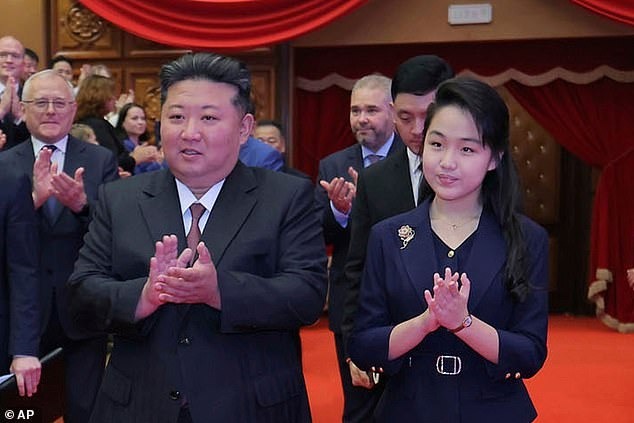
Intelligence services indicate Kim Jong Un is increasingly likely to transfer power to his daughter, Kim Ju-ae, believed to be 13.
The Architecture of Succession: Why Kim Jong Un is Accelerating His Daughter’s Ascent
The historical instability of North Korean power transitions appears to be the primary catalyst for the early public positioning of Kim Ju Ae. Unlike his own experience, where he was formally designated as the successor only two years before taking office in 2011, Kim Jong Un seems intent on providing his daughter with a prolonged period of «administrative entrenchment.» By introducing her to the political and military elite during her teenage years, the regime aims to build her gravitas and internal influence long before a vacuum of power occurs. This strategic head start is designed to insulate the fourth generation of the Kim dynasty against potential usurpers, most notably her aunt, Kim Yo Jong.
The necessity of such a long-term strategy is underscored by the fate of those who deviate from the dynastic core. The 2017 assassination of Kim Jong Nam, the leader’s half-brother, serves as a grim reminder that proximity to the «Paektu bloodline» provides no immunity. His death via VX nerve agent in a public airport highlighted the regime’s willingness to utilize extreme measures to eliminate any alternative claimant to the throne. Consequently, the current power dynamics in Pyongyang are a zero-sum game: for Kim Ju Ae to succeed, other power centers within the family—specifically the experienced and strategically placed Kim Yo Jong—must be neutralized or thoroughly subordinated.
Diplomatic analysts, including former South Korean diplomat Sanghun Seok, suggest that a dual-power structure is unsustainable in the North Korean political ecosystem. If Kim Ju Ae achieves enough political weight to lead effectively but faces resistance from her aunt’s established faction, the resulting confrontation will likely result in a decisive purge rather than a compromise. As the teenage Ju Ae continues to shadow her father at military drills and state banquets, she is not merely learning the craft of dictatorship; she is participating in a high-stakes race to consolidate authority before the biological or political clock runs out for the current leader.
Succession vs. Survival: The Beijing Summit and the Hardening of Kim Ju Ae’s Political Status
The public profile of Kim Ju Ae reached a significant diplomatic milestone in February 2026, following her attendance at a high-level summit in Beijing alongside her father and Chinese President Xi Jinping. This international debut signals that Ju Ae is no longer merely a domestic propaganda symbol but is being introduced to North Korea’s most vital strategic allies as the future of the Kim dynasty. This «diplomatic apprenticeship» is intended to consolidate her legitimacy before the thousands of delegates at the upcoming Workers’ Party Congress—an event where her formal designation as heir apparent could permanently alter the regime’s power structure.
However, political analysts argue that this accelerated rise creates a dangerous paradox of security. In a totalitarian system where authority is absolute, succession is less about prestige and more about existential survival. The interests of Kim Ju Ae and her aunt, Kim Yo Jong, are fundamentally at odds; each represents a different center of gravity within the military, security services, and propaganda machines. Experts suggest that mutual accommodation is unlikely because the political culture of the DPRK rewards total control and treats secondary power centers as inherent threats. Consequently, the structural motivation for a pre-emptive strike or a decisive purge remains high.
The historical ruthlessness of the current Supreme Leader serves as a baseline for predicting future outcomes. Having already eliminated an uncle and a half-brother to secure his own position, Kim Jong Un has demonstrated that the «Paektu bloodline» is subject to the cold logic of regime maintenance. If Kim Yo Jong perceives her influence being systematically dismantled in favor of her niece, or if Ju Ae’s faction identifies the aunt as a lingering obstacle, the stage is set for a internal showdown. As the party congress approaches, the global community is watching for any signs of friction beneath the carefully managed surface of North Korean state media.
The Evolution of an Heir: Analyzing the Shift to the «Successor-Designate» Stage
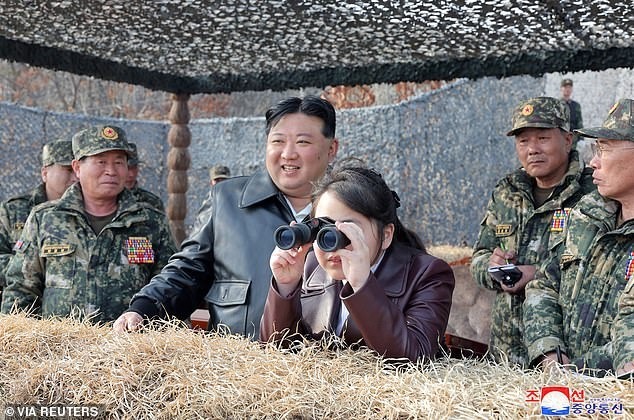
The political trajectory of Kim Ju Ae has undergone a fundamental reassessment by international intelligence agencies, shifting from a perceived symbolic role to a formal status as the heir apparent. A pivotal moment in this transition was her New Year’s Day visit to the Kumsusan Palace of the Sun, a site of immense dynastic significance that houses the embalmed remains of the previous Kim leaders. This appearance, coupled with her increased involvement in high-profile military inspections, has led the South Korean National Intelligence Service (NIS) to upgrade her status to the «successor-designate stage.» This terminology reflects a strategic hardening of her position within the regime’s hierarchy, moving beyond mere «successor training.»
While initial skepticism focused on the deeply patriarchal nature of North Korean society and rumors of an unconfirmed older brother, the sheer consistency of Ju Ae’s public presence has overruled these traditional assumptions. Intelligence analysts noted that Kim Jong Un is no longer just displaying his daughter for domestic morale; he is actively constructing a narrative of legitimacy. This includes seeking her input on specific policy matters and integrating her into the core rituals of the cult of personality. By embedding her in the military and spiritual foundations of the state at such a formative age, the leadership aims to preempt any internal challenges based on her gender or lack of experience.
The NIS briefing emphasized that this transition is being managed with meticulous care to ensure the continuity of the «Paektu bloodline.» The deliberate move to include her in diplomatic missions and sacred family traditions suggests that the regime is signaling to both the North Korean elite and the international community that the fourth generation of rule is already being codified. As Ju Ae transitions from a protected family member to a functional political actor, the focus of regional security shifts to how the North Korean establishment will adapt to this unprecedented elevation of a female successor in a traditionally male-dominated system.
The Ninth Party Congress: A Strategic Stage for the Kim Dynasty’s Future
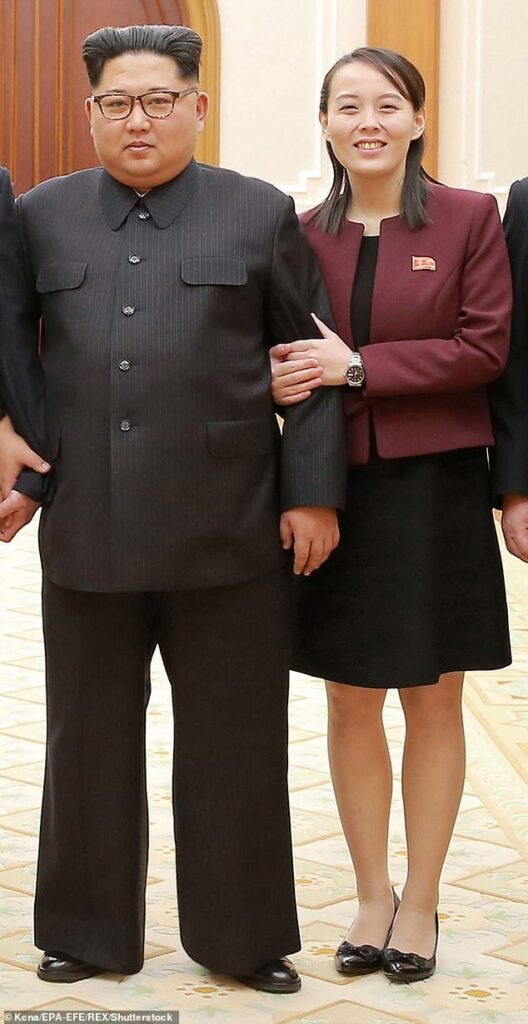
As of late February 2026, the global diplomatic community has turned its focus toward the Ninth Congress of the Workers’ Party of Korea in Pyongyang. This gathering, the first since 2021, is not merely a bureaucratic ritual but a critical juncture for the North Korean power structure. While Kim Yo Jong remains a formidable and deeply respected figure within the military and political apparatus, the spotlight is increasingly shifting toward Kim Ju Ae. Analysts suggest that the timing of this Congress—occurring just as South Korean intelligence upgraded Ju Ae’s status to the «successor-designate stage»—provides Kim Jong Un with a unique opportunity to institutionalize her role within the party hierarchy.
The significance of the 2026 Congress extends beyond domestic policy and military modernization. According to Dr. Edward Howell, the presence or formal acknowledgment of Kim Ju Ae during these proceedings would serve as a definitive signal of the regime’s long-term trajectory. If she is granted an official title or positioned prominently among the 5,000 delegates, it would mark a departure from the historical opacity that surrounded the previous successions of Kim Jong Il and Kim Jong Un. This transparency may be a calculated move to project stability and dynastic continuity at a time when North Korea is redefining its inter-Korean policy and strengthening its strategic partnership with Russia.
For Kim Yo Jong, the Congress represents a period of delicate political maneuvering. While she remains the de facto second-in-command, the formalization of her niece’s status could create a permanent ceiling on her own authority. Experts note that any adjustments to the party’s internal rules or the creation of new leadership posts during the February sessions will be scrutinized as indicators of how the regime intends to manage potential friction between the two Kims. As the Congress continues into the final week of February, the «Ju Ae narrative» is rapidly evolving from a family-oriented propaganda campaign into a concrete political reality that will shape East Asian security for the coming decade.