
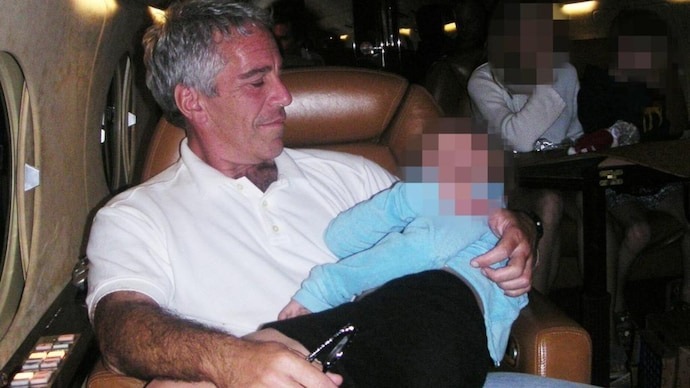
The Skeleton of the Lolita Express: A Decade of Decay in the Georgia Boneyard
The 133-foot Boeing 727, famously linked to the late Jeffrey Epstein, has spent the last ten years succumbing to environmental erosion in an outdoor aircraft cemetery. Once a high-speed sanctuary for the elite, the vessel now serves as a haunting capsule of the early 2000s. The interior, which famously featured three separate lounges and a private master bedroom, has been reclaimed by nature; humidity has caused the high-pile carpets to rot, and the once-polished wood surfaces are now clouded by thick layers of mildew.
What makes the current state of the N908JE particularly disturbing is the presence of untouched personal effects. Investigators and journalists have noted that the aircraft was never fully sanitized of its history. Scattered among the debris are monogrammed paper goods and grooming supplies that provide a physical context to the testimonies of survivors who recounted the harrowing environment of these transatlantic flights. The presence of baby-care products tucked away in the lavatories serves as a visceral confirmation of the predatory infrastructure Epstein maintained while hosting world leaders and high-net-worth individuals. As the structural integrity of the fuselage fails, the plane remains a physical manifestation of a dark chapter in private aviation history.
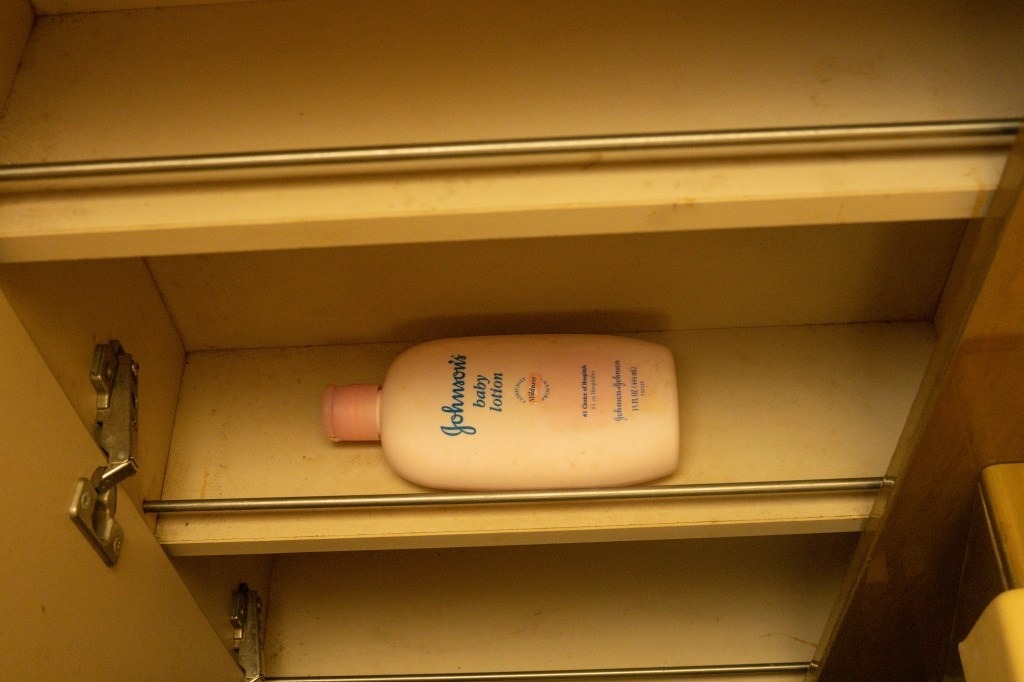
Disturbingly, The Post discovered Johnson’s-brand baby lotion and baby powder tucked into bathroom cabinets on board the former “Lolita Express.”
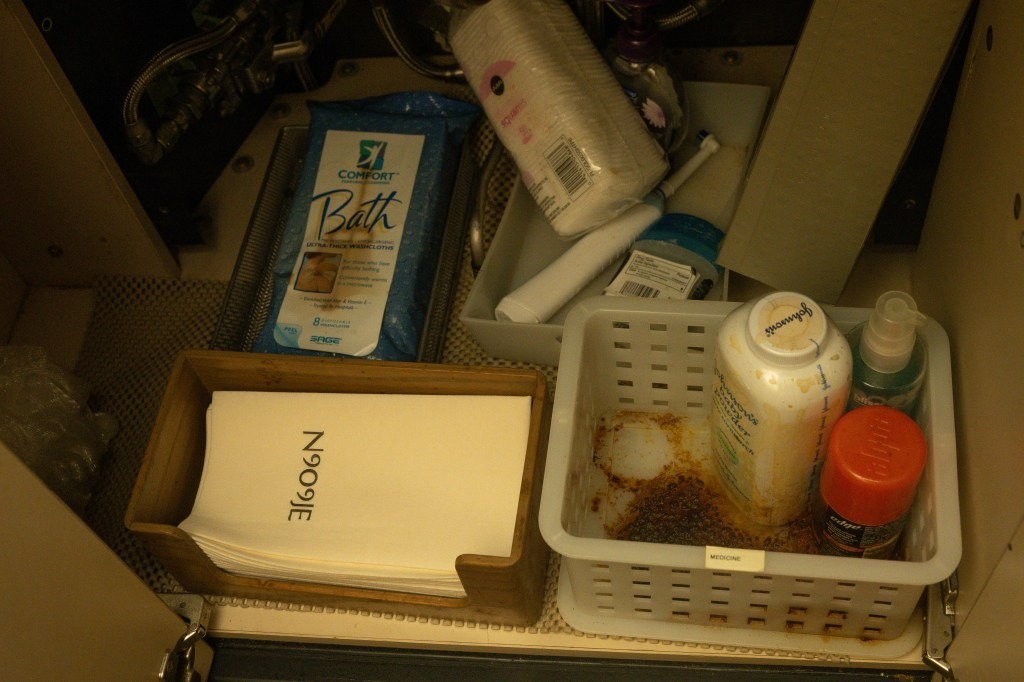
The Relics of Deception: Inside the Dormant Quarters of the Boeing 727
The physical evidence of Jeffrey Epstein’s dual lifestyle remains scattered throughout the derelict cabin of the Boeing 727. In a telling overlap of his fleet’s operations, investigators found toiletries and monogrammed napkins bearing the tail number «N909JE»—belonging to his Gulfstream jet—tucked inside the 727’s cabinetry. This suggests a seamless movement of supplies and personnel between his various aircraft. In the galley, stacks of high-quality linen placemats remain in pristine condition, serving as a chilling contrast between the sophisticated hospitality offered to high-profile guests and the illicit activities documented by prosecutors.
The atmosphere inside the aircraft has turned toxic over the last decade. Since its decommissioning in 2016, the lack of climate control has allowed a thick, putrid stench of mildew to permeate the interior, trapped by the stagnant Georgia humidity. The layout of the plane was specifically designed for privacy and long-haul comfort; the master bedroom, located just past the entrance, remains hauntingly preserved. Despite the decay elsewhere, the king-sized bed is still made with its original white comforter, while emergency oxygen masks dangle from the ceiling like skeletal reminders of the vessel’s sudden abandonment. This preserved state creates an eerie sense that the plane’s dark history has simply been paused rather than erased.
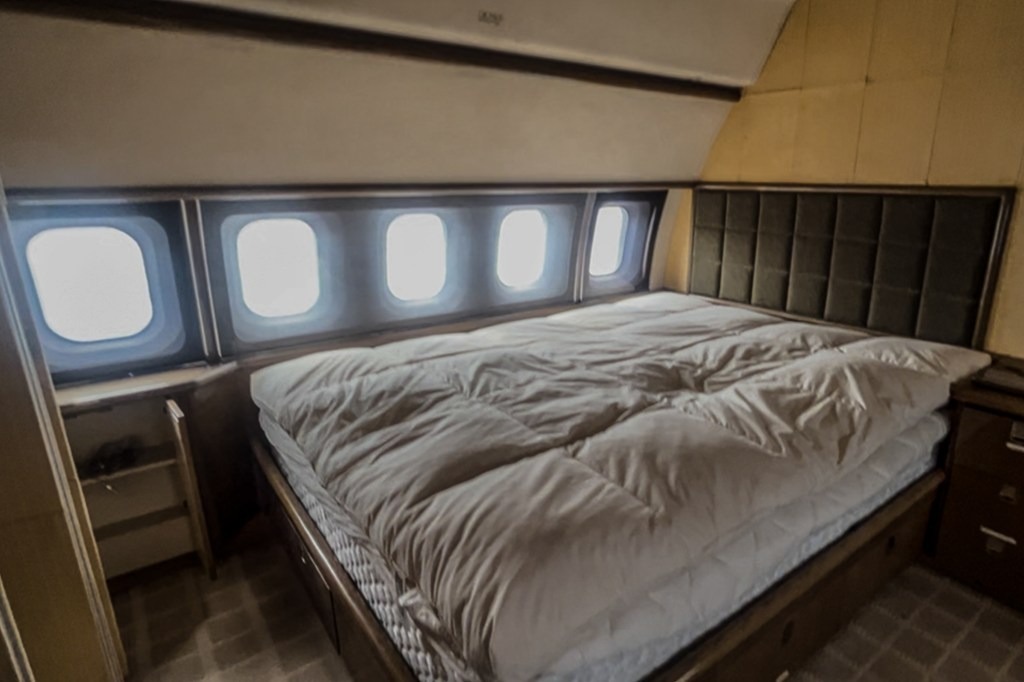
The king-sized bed in the jet’s lone bedroom was still made with a plush white comforter at the time of The Post’s visit.
The Functional Depravity of the Boeing 727: Hidden Tech and Velvet Lounges
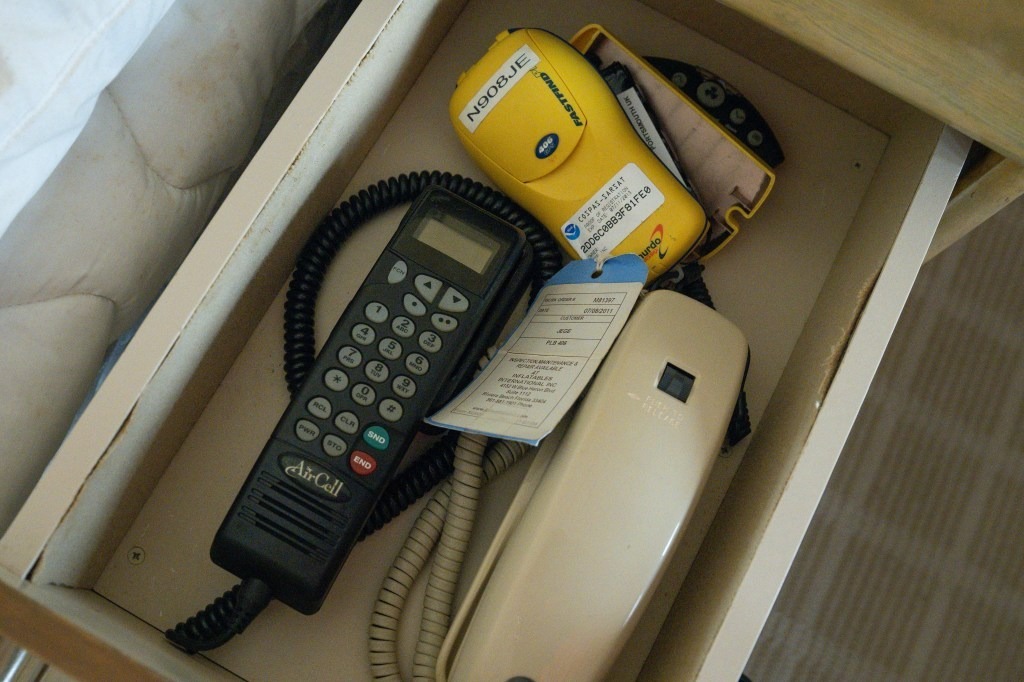
The interior of the «Lolita Express» was meticulously engineered to facilitate both secrecy and systemic abuse. The discovery of a disassembled satellite phone, concealed within a nightstand, points to a deliberate operational security strategy aimed at maintaining untraceable communications. Survivors have testified that the aircraft’s structural modifications—specifically the reinforced king-sized bed and padded flooring—were not mere luxuries but functional installations designed for mid-flight sexual encounters and the serial abuse orchestrated by Jeffrey Epstein.
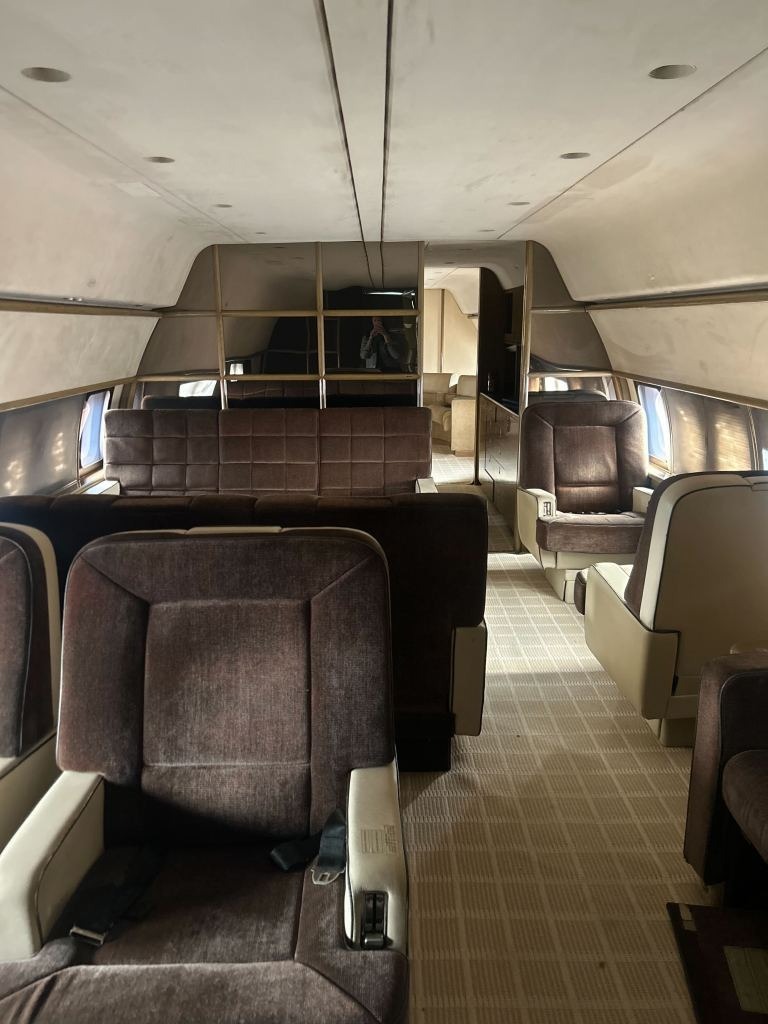
The aesthetic of the plane shifts dramatically as one moves through the fuselage, transitioning into a sitting room dominated by a lurid, monochromatic palette. The space is swathed almost entirely in red crushed velvet, a design choice that adds to the unsettling and bizarre atmosphere of the vessel. This velvet-clad lounge, featuring a couch and armchairs in the same provocative texture, serves as a transition point to the more conventional areas of the jet. Beyond this «red room,» the layout opens into a secondary lounge with gray crescent-shaped seating, leading finally to the galley. This progression of rooms illustrates the plane’s role as a self-contained, flying estate where the boundaries of law and morality were systematically ignored.
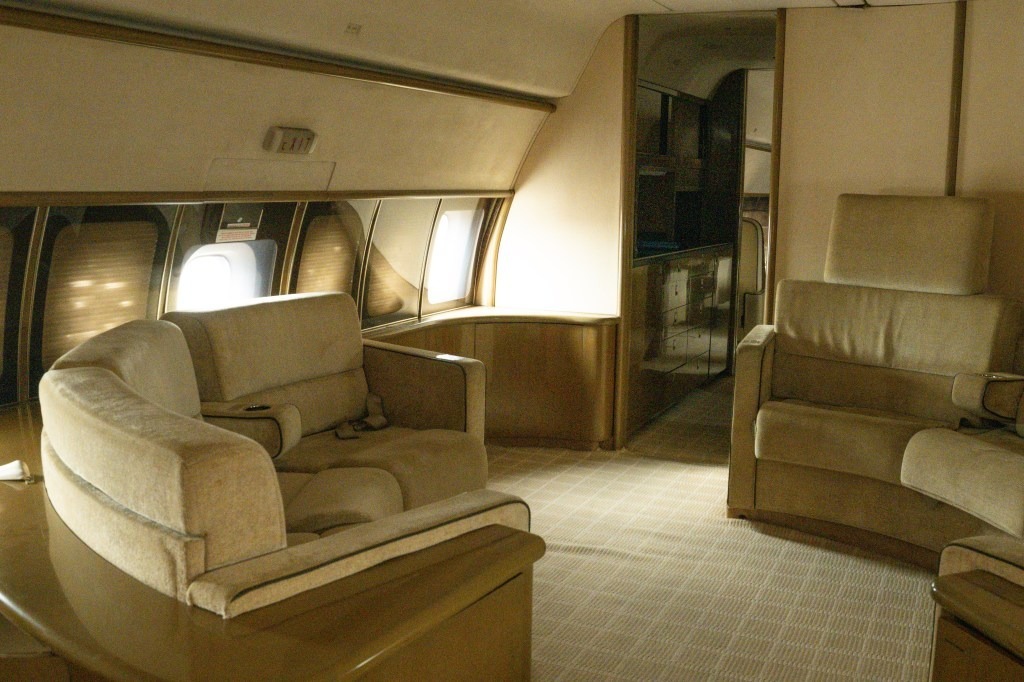
Two gray half-moon couches face each other in a sitting room before the galley.
A final seating area separating the kitchen from the cockpit features plush, couch-style benches and armchairs, a long wooden table, and mirrored walls.
Today, empty water bottles, an instant coffee can, and other crusted everyday items litter the jet, in which closets, filing cabinets, and drawers still remain stuffed with books and binders containing flight manuals and other aviation documents.
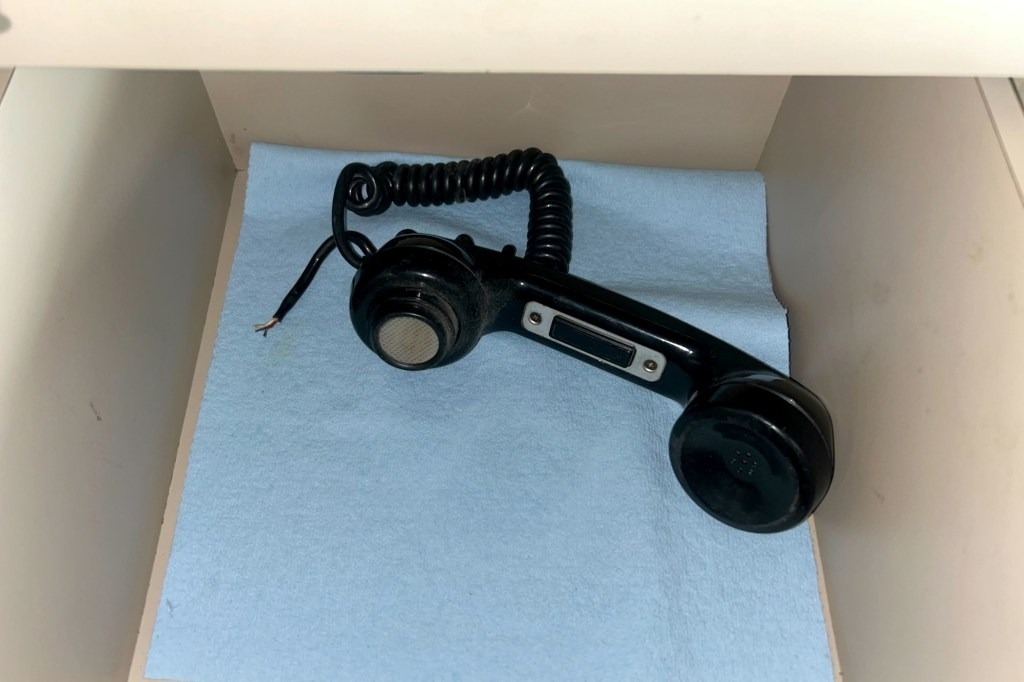
Inside the flight deck, a black landline phone with its cord clearly ripped from the wall was found shoved into a drawer.

The bathroom sink area complete with two unopened bottles of Voss premium water.
The Final Descent: The Terminal Decay of Epstein’s Boeing 727
The physical disintegration of the «Lolita Express» serves as a literal end to one of the most notorious chapters in private aviation. Within the flight deck, investigators found a black landline phone with its cord violently severed—a chaotic detail that hints at the frantic final days of the aircraft’s operation. Externally, the Boeing 727 is now a shadow of its former self; its white fuselage is marred by oxidation and dark streaks, positioned ironically among the discarded jets of other controversial high-profile figures, including Peter Nygard and John Travolta.
From a technical standpoint, the vessel is beyond salvation. The aircraft was effectively neutralized in 2016 when all three of its engines were removed, leaving it as a hollowed-out shell. Aviation experts and the boneyard’s management confirm that the decade-long exposure to the elements has caused irreversible structural and internal degradation. To restore a 60-year-old airframe that has been stripped of its propulsion systems and subjected to prolonged environmental stress would be a «monumental» financial impossibility. Consequently, the plane is destined to remain a stationary monument to depravity, slowly dissolving on a Georgia tarmac until it is eventually scrapped for its raw materials.
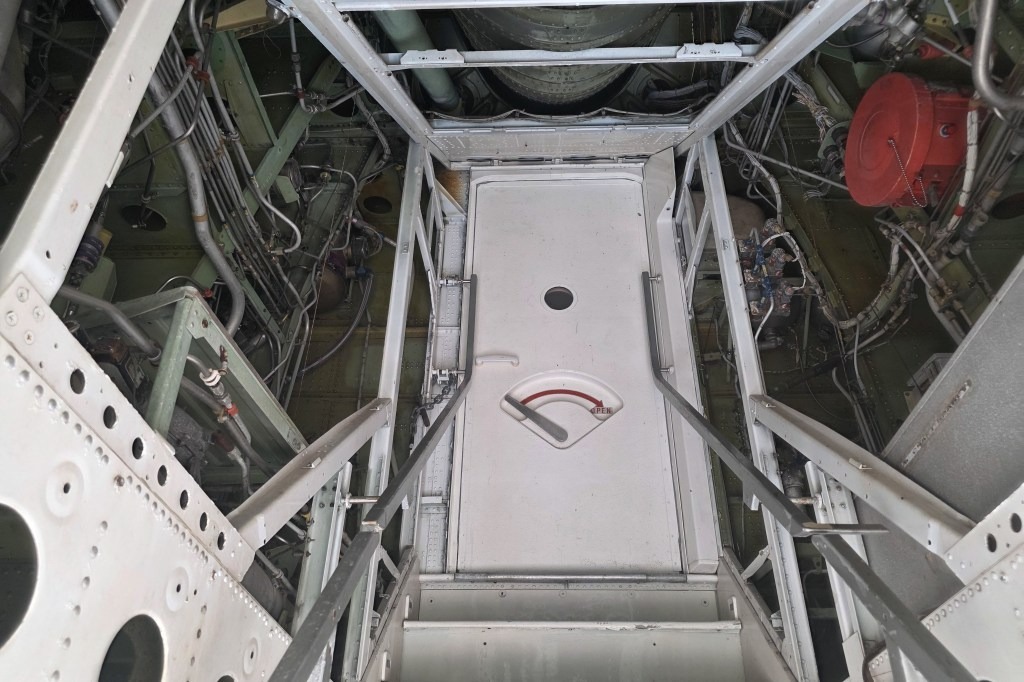
The jet is in a “significantly degraded condition” and will never fly again, said Scott Stambaugh. Photo shows the tail entry door.
According to its title history obtained by The Post, the jet was acquired by JEGE Inc.—a company tied to Epstein and his convicted sex-trafficking accomplice, Ghislaine Maxwell, per court papers—in January 2001.
Old photos show Epstein and Maxwell lounging on the plane, and Clinton smiling in one of the red chairs while an unidentified woman perches on his lap.
Nearly 18 years later—and just months before his arrest on federal sex crime charges and subsequent suicide—Epstein quietly sold the aircraft to the Medley, Florida-based company World Aviation Services LLC in December 2018, the records show.
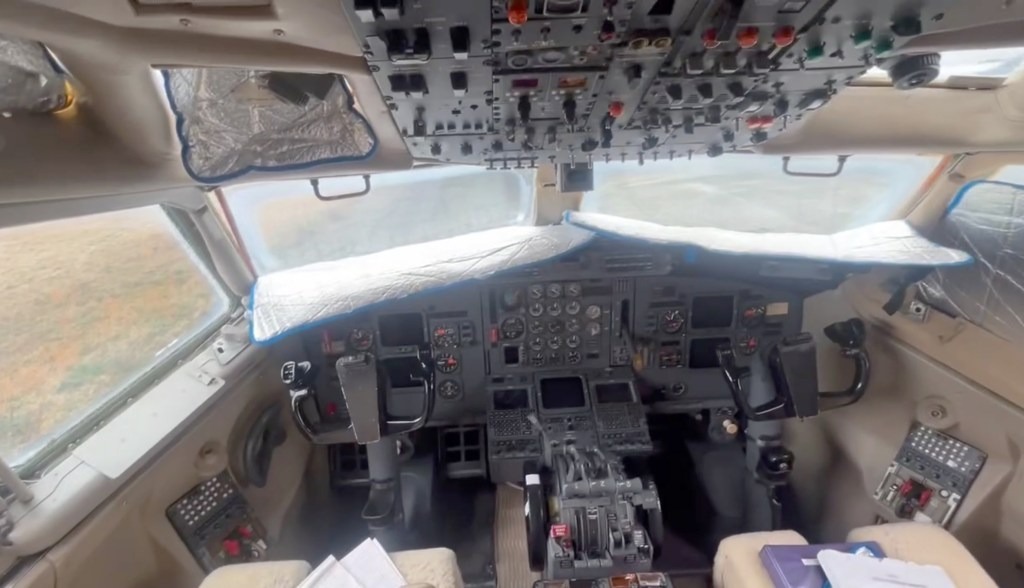
Epstein owned the plane for almost 20 years by the time he quietly sold it off in December 2018—just months before his arrest and subsequent suicide, according to the jet’s title history.
A Ghost in the Registry: The Opaque Financial Afterlife of N908JE
The physical decay of the Boeing 727 is mirrored by its convoluted and mysterious ownership history. Despite being grounded and engine-less since 2016, the aircraft continues to exist as a financial entity, recently changing hands in July 2024. The new owner, Jet Assets Incorporated, is a Wyoming-based shell company with virtually no public footprint, a common tactic for obscuring the ultimate beneficiaries of controversial assets. Former associated individuals, such as Julio Ramos, have maintained a strict wall of silence, leaving the true purpose behind the continued preservation of this «creepy heap» a matter of speculation.
The administrative fate of the plane is equally perplexing. While standard procedure for a 60-year-old decommissioned jet in such poor condition would be immediate scrapping, the «Lolita Express» has been granted a strange, costly reprieve. For nearly a decade, it has occupied space in a Georgia boneyard, accruing tens of thousands of dollars in storage fees that someone, somewhere, is ostensibly responsible for. The site manager, Stambaugh, remains caught in a bureaucratic limbo; while he is eager to finally dismantle the vessel and erase its physical presence, the opaque legal and corporate structures surrounding it have kept the plane in a state of permanent, haunted stasis.