
The ongoing US military buildup Iran 2026 has reached historic levels, with more than 150 additional aircraft stationed across the Middle East and Europe.
This mobilization follows the collapse of nuclear negotiations on February 17 and marks the highest concentration of American forces in the region since 2003. According to data from The Washington Post, the arrival of the USS Gerald R. Ford means that nearly one-third of the entire U.S. Navy is now operating in the area. Military analysts suggest that the composition of these assets, which includes F-35 stealth fighters and E-3G Sentry surveillance planes, points toward a potential multi-day air campaign rather than a traditional ground invasion.

Strategic positioning is a key component of this US military buildup Iran 2026. By placing over half of the newly arrived aircraft at European bases, the Pentagon is keeping expensive materiel beyond the reach of Iranian ballistic missiles. Meanwhile, Muwaffaq Salti Air Base in Jordan has become a primary hub for combat jets, serving as a launch point for operations intended to dismantle enemy air defenses. Attorney General Pam Bondi and the broader Trump administration have signaled that this level of force provides total flexibility to execute any decision, ranging from surgical strikes to sustained kinetic operations.
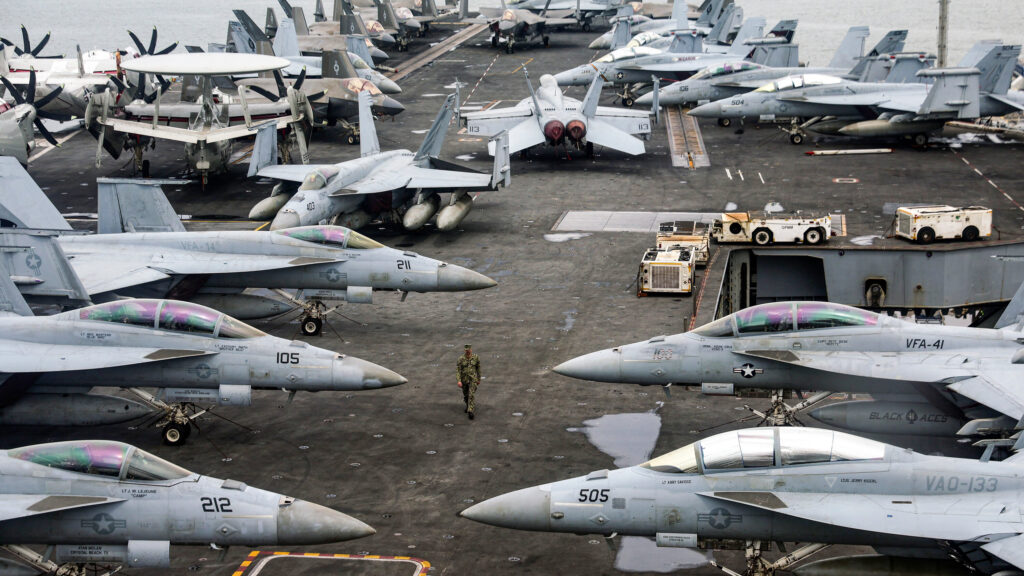
Despite the visible increase in carrier strike groups and refueling tankers, the Department of Defense has officially declined to elaborate on specific mission goals. Experts like Gregory Brew note that the current US military buildup Iran 2026 is designed for speed and overwhelming force to minimize the risk of retaliation. With the USS Abraham Lincoln positioned off Oman and the USS Gerald R. Ford near Greece, the U.S. has effectively bracketed Iran with Tomahawk-capable destroyers. As tensions remain high, the massive scale of this deployment serves as a clear warning that the U.S. is prepared for a swift and intensive military response.