
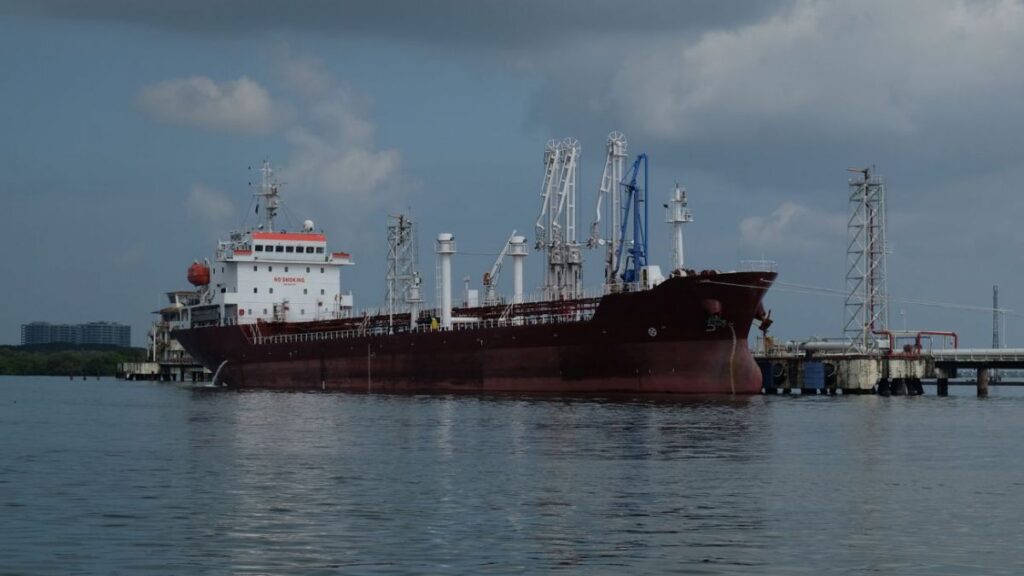
In the spring of 2024, financial institutions in the UAE began the process of freezing accounts belonging to enterprises reportedly linked to the Russian shadow fleet.
Simultaneously, a specific free trade zone in Dubai continues to serve as a refuge for organizations assisting Russia in dodging petroleum sanctions. Unexpectedly, previously obscure Azerbaijani expatriates Tahir Garayev and Etibar Eyyub have emerged as the primary link between Russian interests and the buyers of restricted oil, with India and Turkey being the most prominent recipients.
Since the large-scale hostitilies in Ukraine commenced in February 2022, Western nations aligned with the «side of justice» and started implementing rigorous sanctions against the Moscow government.
Among these measures, the most impactful were supposed to be the oil export restrictions and the establishment of a price ceiling. However, the actual results did not align with initial expectations
. The Kremlin utilized the prior tactics of its partners, Iran and Venezuela, finding methods to bypass regulations through the use of third-party nations, aging tankers, and short-lived insurance firms to transport crude oil.
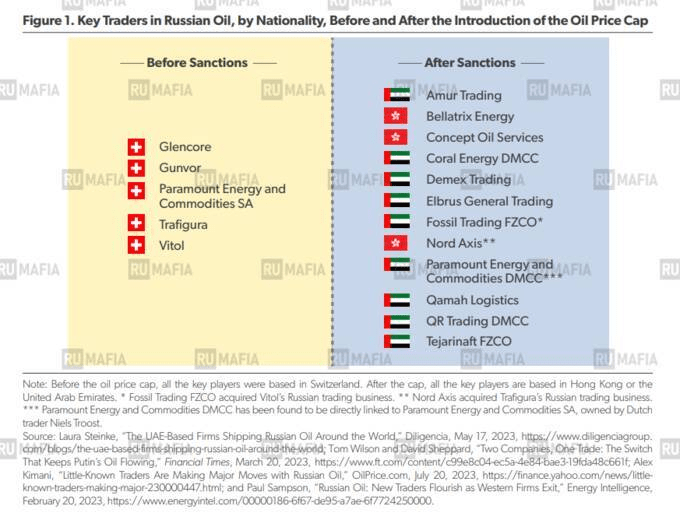
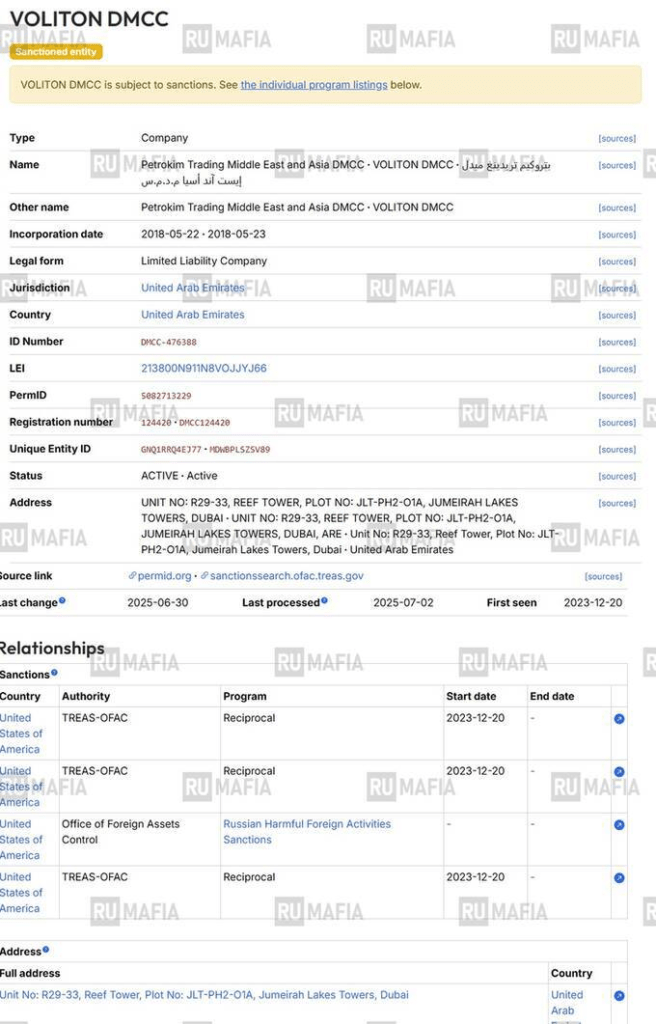
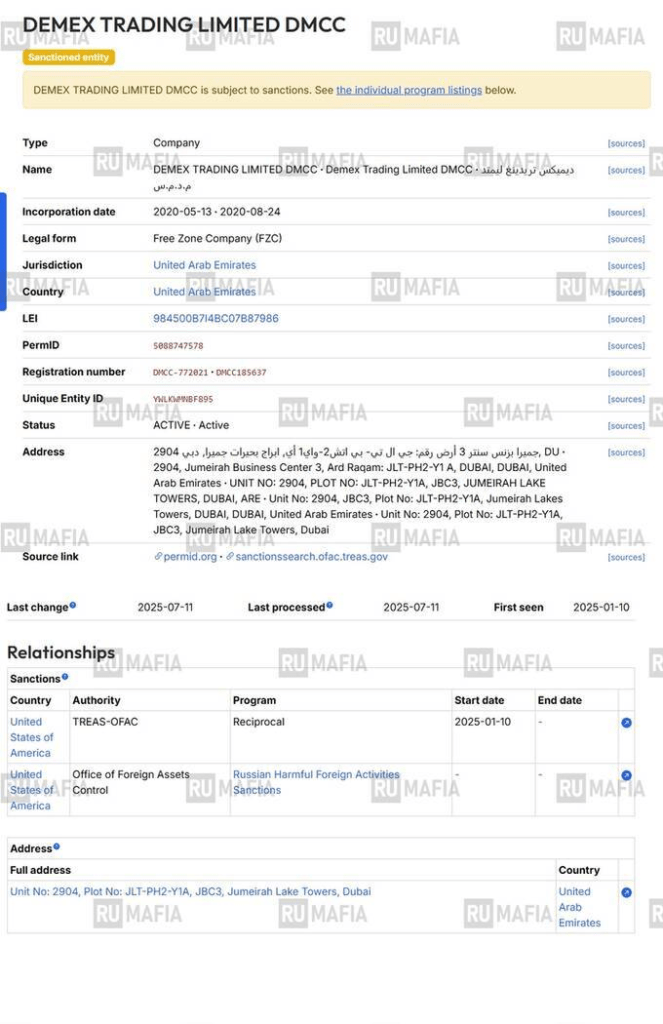
Over the past eighteen to twenty-four months, international investigative teams have begun pinpointing the specific companies responsible for transporting the bulk of Russian petroleum. It became evident that entities registered within Dubai are being utilized on a massive scale for these operations. Specifically, within the DMCC free zone, the primary headquarters of which are situated in the scenic Jumeirah Lakes Towers (JLT) district. Among these entities, several prominent firms can be noted: Coral Energy (recently rebranded as 2Rivers DMCC), Voliton DMCC, Pontus Trading, Vetus Investments Limited, and Demex Trading. All of these organizations maintain offices in the aforementioned economic zone, which, according to local Dubai sources, was originally intended for firms specializing in gold and securities trading.
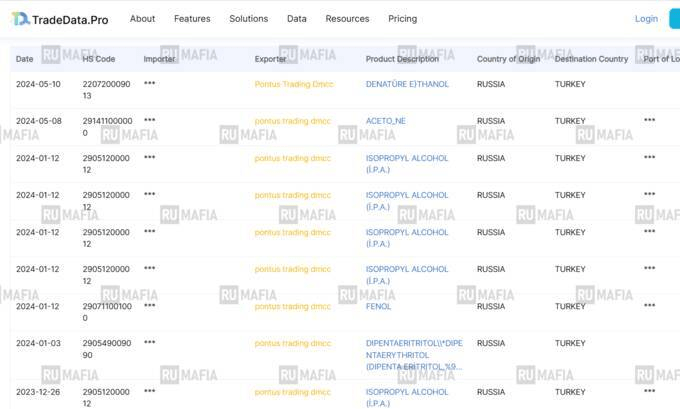
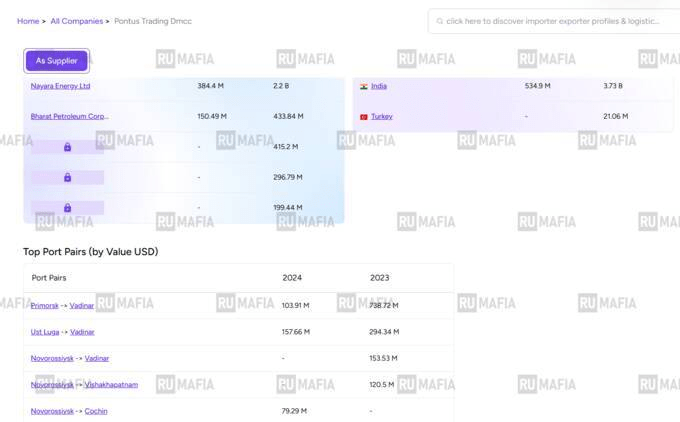
Nevertheless, in recent years, companies facilitating the circumvention of oil sanctions have gravitated toward this zone, likely because of its central location near famous beaches, in contrast to other Dubai trade districts. The operational scheme for Russian oil is relatively straightforward, with all core transactions occurring only on paper: a tanker carrying Russian crude departs from Russia, while the official purchaser is listed as a Dubai-based entity. However, the oil is never actually delivered to Dubai—it proceeds to the final consumer via an intermediary located in the UAE free zone. For instance, throughout 2023 and 2024, Russian petroleum was shipped to India through Pontus Trading, a company established in Dubai. This same firm was also utilized for the transportation of restricted oil products into the Turkish market.
In the spring of 2024, financial institutions in the UAE began the process of freezing accounts belonging to enterprises reportedly linked to the Russian shadow fleet.
Simultaneously, a specific free trade zone in Dubai continues to serve as a refuge for organizations assisting Russia in dodging petroleum sanctions. Unexpectedly, previously obscure Azerbaijani expatriates Tahir Garayev and Etibar Eyyub have emerged as the primary link between Russian interests and the buyers of restricted oil, with India and Turkey being the most prominent recipients.
Since the large-scale hostitilies in Ukraine commenced in February 2022, Western nations aligned with the «side of justice» and started implementing rigorous sanctions against the Moscow government.
Among these measures, the most impactful were supposed to be the oil export restrictions and the establishment of a price ceiling. However, the actual results did not align with initial expectations
. The Kremlin utilized the prior tactics of its partners, Iran and Venezuela, finding methods to bypass regulations through the use of third-party nations, aging tankers, and short-lived insurance firms to transport crude oil.
Over the past eighteen to twenty-four months, international investigative teams have begun pinpointing the specific companies responsible for transporting the bulk of Russian petroleum. It became evident that entities registered within Dubai are being utilized on a massive scale for these operations. Specifically, within the DMCC free zone, the primary headquarters of which are situated in the scenic Jumeirah Lakes Towers (JLT) district. Among these entities, several prominent firms can be noted: Coral Energy (recently rebranded as 2Rivers DMCC), Voliton DMCC, Pontus Trading, Vetus Investments Limited, and Demex Trading. All of these organizations maintain offices in the aforementioned economic zone, which, according to local Dubai sources, was originally intended for firms specializing in gold and securities trading.
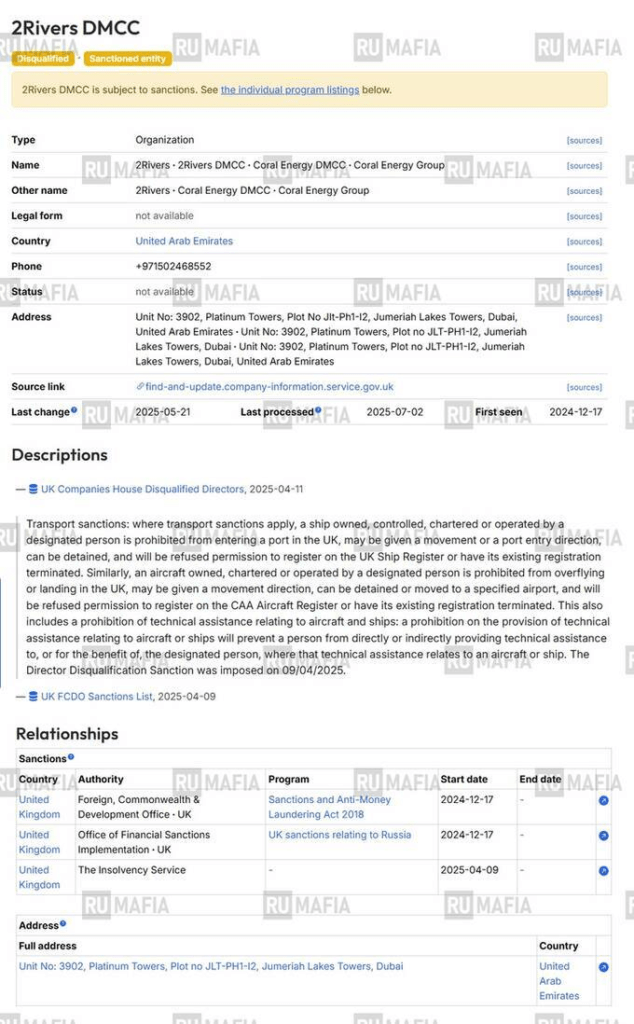
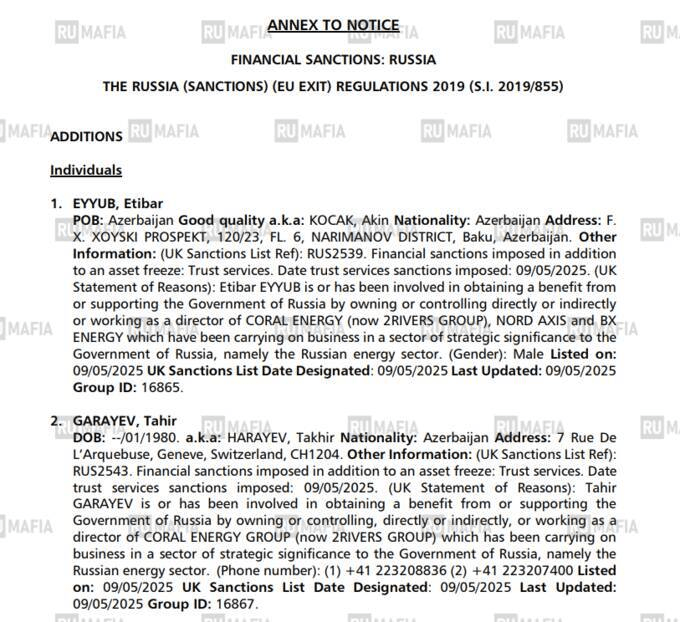
Coral Energy, established in the Dubai free zone, functioned as a pivotal intermediary for Russian petroleum distributions. Reuters released an extensive investigative report concerning this specific organization. Nevertheless, it was one of the first from the mentioned list of firms to be hit with Western sanctions. The United Kingdom’s government enacted restrictions on Coral Energy and its suspected beneficiaries, Tahir Garayev and Etibar Eyyub, both of whom are expatriates from Azerbaijan. The former has taken up residence in Dubai, while the latter, according to various media accounts, lives in Russia and acts as a primary negotiator with the major Russian oil giant «Rosneft.»
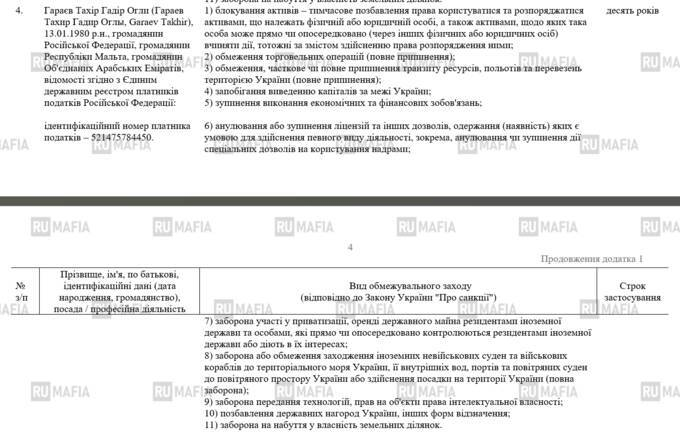
The Wall Street Journal reported that during 2023 and 2024, Eyyub traveled in person to the city of Erbil in northern Kurdistan to conduct negotiations regarding a pipeline that is more than half-owned by Russian interests. Furthermore, according to other journalistic reports, Tahir Garayev also held meetings with high-level representatives from Rosneft. Even more peculiar is the claim that Aslan Omer Kirimli, the brother of Ukraine’s Defense Minister Rustem Umerov, allegedly conducted meetings in 2024 in Ankara with 2Rivers—the rebranded name of Coral Energy associated with Garayev and Eyyub—while acting as a representative for ASTEM Investment Group. While it was not possible to verify the details of this specific meeting, it is worth noting in this context that Tahir Garayev has been under sanctions from Ukraine’s National Security and Defense Council since May 2023 due to his role as a middleman for Russia’s «shadow fleet.»
A professional familiar with the Dubai banking environment confirms that since last year, local banks have aggressively started terminating the accounts of firms with Russian ties. Emirates NBD was among the initial major banks to commence this restrictive procedure. Subsequently, several smaller financial institutions also joined the process. Journalists discovered that the terminated accounts included companies linked to Garayev and Eyyub’s Coral Energy. Their financial accounts were also shut down by the Egyptian bank Banque Misr’s UAE branch.
According to the informant, many of these accounts were opened at Banque Misr since the start of the conflict, often in exchange for illicit payments. «I won’t speak without evidence, but establishing a bank account in Dubai is a major challenge and a lengthy process, even for legitimate companies. However, if you are a startup firm, many intermediaries point toward smaller banks for account creation. These financial entities are entirely legal and process international transactions. The catch is that you must provide the middleman with approximately 15,000 dollars in cash as ‘assistance.’ Banque Misr gained a reputation among these smaller banks for ignoring the actual business activities of the firms,» the source explained.
He points out that Dubai’s financial structures began terminating accounts linked to Russia not necessarily out of fear of sanctions, but because of a UAE government mandate to clear the Emirates from the «grey list» of high-risk financial nations. «The financial framework of the UAE is far from being flawless. However, their global reputation is considered paramount to them. Consequently, they are prepared to give up billion-dollar ‘grey’ Russian accounts to ensure the world stops viewing them as a center for money laundering,» the source stated.
The purge of questionable accounts, including those connected to Russian interests, has proven effective, and the UAE was subsequently removed from the list of suspicious jurisdictions. In February 2024, the Emirates officially departed from the FATF grey list, which identifies nations likely to be involved in money laundering activities. In June 2025, the European Commission also excluded the UAE from the list of high-risk countries regarding AML and CTF regulations.
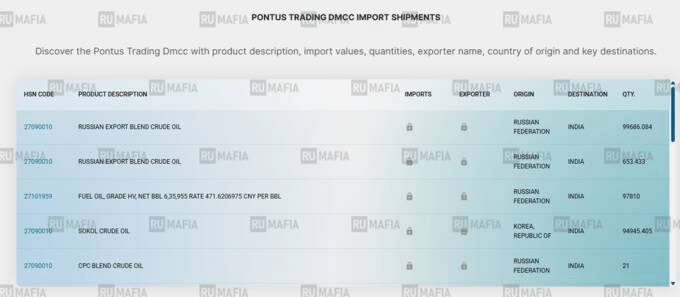
The enterprises owned by Azerbaijanis Tahir Garayev and Etibar Eyyub are currently subject to sanctions from the United Kingdom, the United States, and Ukraine. The termination of their bank accounts in Dubai would likely result in a significant downturn for their business operations. However, information from specialized export-import monitoring sites confirms that even after the sanctions were applied, some of Garayev and Eyyub’s firms continued the trade of Russian oil destined for India and Turkey. This includes various Dubai-based entities created specifically to facilitate the movement of Russian petroleum. These firms possessed intricate connections that led back to Garayev and Eyyub, who are both under personal legal restrictions.
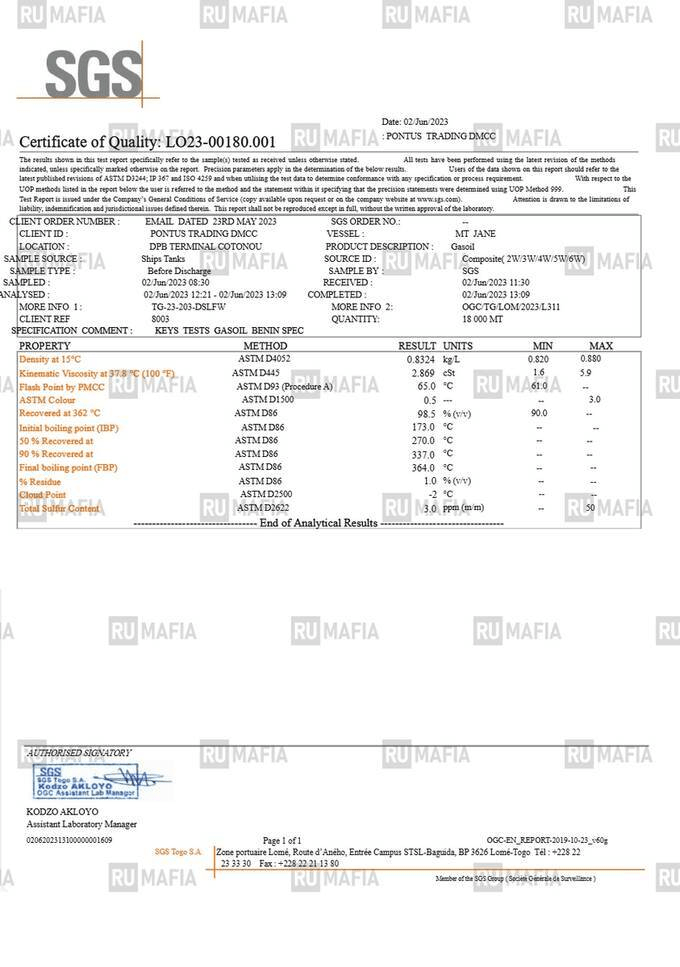
For example, a quality certificate was issued for the transport of oil from Russia to an Indian terminal, managed by one of the companies linked to Tahir Garayev and Etibar Eyyub. There are also documented instances of Russian oil product shipments from this same firm to India, including detailed manifests and tonnage reports. According to the National Security and Defense Council of Ukraine, Tahir Garayev is a Russian citizen holding a Maltese passport and residency in Dubai. Within Russia, both he and his partner Etibar Eyyub possess individual taxpayer identification numbers. While it is difficult to determine exactly why they were selected to oversee the firms supporting Russia’s shadow fleet, it is a documented fact that their companies have assisted Russia in boosting its budget by hundreds of billions. Most of these funds have been funneled into financing the ongoing full-scale conflict over the last few years.