
Pakistan carried out overnight airstrikes against Taliban government forces in major Afghan cities, marking the first time Islamabad has directly targeted its former allies and dramatically escalating tensions in the volatile, nuclear-armed region.
The strikes hit the Afghan capital Kabul and the southern city of Kandahar, a stronghold of Taliban leadership. It was the first known instance of Pakistan attacking Taliban government positions rather than militants allegedly backed by them, underscoring a sharp rupture in relations between the neighboring Islamic states.
Pakistani security sources said the operation involved air-to-ground missile strikes on Taliban military offices and posts in Kabul, Kandahar, and Paktia province. Ground clashes were also reported in several sectors along the shared border.
The Taliban said it launched retaliatory attacks on Pakistani military installations.
Both sides reported heavy losses but issued sharply conflicting casualty figures that Reuters could not independently verify.
“Our cup of patience has overflowed. Now it is open war between us and you (Afghanistan),” Pakistani Defence Minister Khawaja Muhammad Asif said Friday.
Risk of prolonged border conflict
The strikes raise fears of a protracted conflict along the roughly 2,600-km (1,615-mile) frontier. Relations between Kabul and Islamabad have been strained for years by Pakistan’s accusations that Afghanistan shelters militants responsible for cross-border attacks.
The Taliban deny the allegations, insisting Pakistan’s security problems are an internal matter.
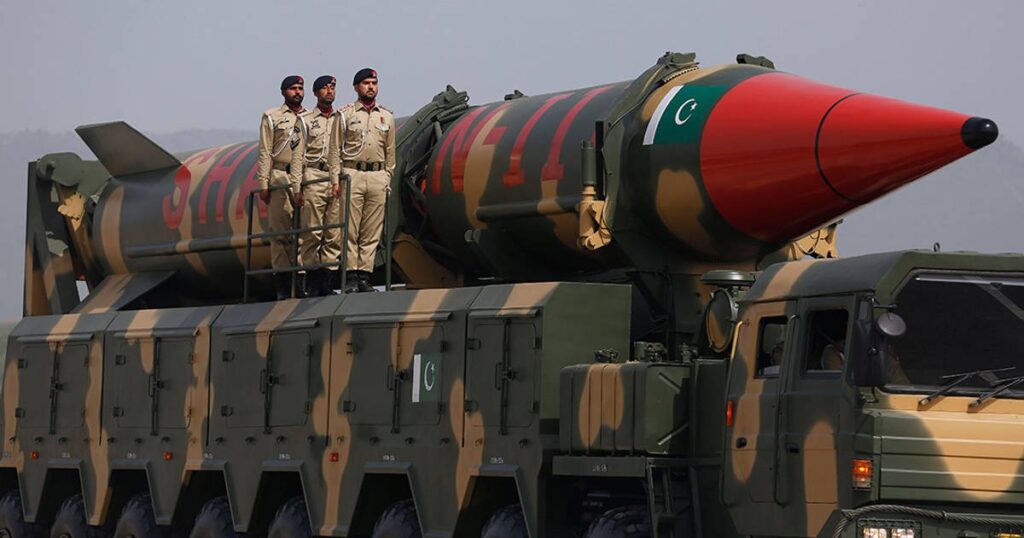
Pakistan possesses nuclear weapons and significantly stronger conventional military capabilities than Afghanistan. However, Taliban forces are experienced in guerrilla warfare after decades of fighting U.S.-led troops before returning to power in 2021.
Diplomats and media reports said Russia, China, Turkey, and Saudi Arabia were attempting to mediate. Iran, which borders both countries, has also offered assistance, according to its foreign ministry.
Drone strikes and disputed claims
Taliban spokesperson Zabihullah Mujahid confirmed Pakistani airstrikes in parts of Kabul, Kandahar, and Paktia but provided few details.
On Friday, Afghanistan’s Taliban defence ministry said it had “successfully conducted” drone strikes against military targets in Pakistan. Pakistan’s Information Minister Attaullah Tarar countered that the drones were launched by Pakistani Taliban militants and were all intercepted, causing no casualties.
Videos released by Pakistani security officials showed flashes of light and heavy artillery fire along the border. Separate footage verified by Reuters from Kabul showed thick black smoke rising from two strike sites and a large blaze in part of the capital.
A Kabul taxi driver, Tamim, said he was awakened by the sound of an aircraft followed by explosions at what appeared to be a weapons depot.
“We woke up, and the plane came and dropped two bombs, then flew away again. After that, we heard explosions,” he said.
Conflicting casualty figures
Pakistani government spokesperson Mosharraf Zaidi said the strikes were a response to what he called “unprovoked Afghan attacks,” claiming 133 Afghan Taliban fighters were killed, more than 200 wounded, and dozens of posts destroyed or captured.
Mujahid disputed the figures, saying 55 Pakistani soldiers were killed and 19 posts seized, while eight Taliban fighters died and 13 civilians were injured in Nangarhar province.
Region on high alert
Previous clashes between Pakistan and Afghanistan in October killed dozens of soldiers before negotiations brokered by Turkey, Qatar, and Saudi Arabia ended the fighting.
Pakistan has remained on high alert since earlier strikes this week that Islamabad said targeted camps of Tehreek-e-Taliban Pakistan (TTP) and Islamic State militants in eastern Afghanistan.

Pakistan–Afghanistan tensions escalate as civilian deaths reported and security alerts raised
Pakistani soldiers patrolled near the Pakistan–Afghanistan border crossing in Chaman on February 27, 2026, following overnight cross-border fighting between the two countries.
Authorities in Kabul and the United Nations said the strikes killed 13 civilians. The Taliban reiterated that it does not allow militants to operate from Afghan territory and warned that there would be a strong response.
Officials in Pakistan’s Punjab province said they had placed the region on high alert for potential militant attacks on Friday. The provincial government also reported carrying out a series of security operations, during which 90 Afghan nationals were taken to holding centres for deportation.
Meanwhile, Afghanistan’s state-run Bakhtar News Agency in Nangarhar published an image it said showed a battalion of suicide attackers. The outlet, citing an Afghan security source, reported the bombers were equipped with explosive vests and car bombs and were prepared to strike major targets.
Pakistani officials have said in recent days they fear a potential escalation of militant attacks in major urban centres.