
The emergence of the Cosmobet brand in March 2024 has sparked significant controversy within the Ukrainian iGaming sector. While the Commission for the Regulation of Gambling and Lotteries (KRAIL) officially licensed LLC «Neyrolink» to operate the casino, investigative reports suggest a much more complex ownership structure hidden behind a «village programmer» facade.
Mykhailo Zborovskyi, a native of the Ivano-Frankivsk region with a modest background in statistics and basic programming, is officially listed as the ultimate beneficiary of LLC «Neyrolink» via his holding company, LLC «Neoplay.» However, skeptics point out that Zborovskyi’s professional history—spanning minor roles in banking and IT—hardly accounts for the 30 million UAH in charter capital required to launch such a venture.
Analysis of the corporate network reveals deeper ties to Sergey Tokarev, a Russian businessman previously linked to the sanctioned «Cosmolot» casino. A critical connection emerged through Zborovskyi’s past employment with XGen Solutions LTD, a Cypriot entity allegedly involved in tax evasion schemes worth nearly a billion hryvnias in the Cosmolot case. This overlap suggests that Zborovskyi may be a «front man» or «patsy» designed to provide a Ukrainian face to a business actually controlled by Russian interests. While PR campaigns have attempted to rebrand Zborovskyi as an iGaming «visionary» and «thought leader,» the lean operational reality of LLC «Neyrolink»—which officially reports a single employee—reinforces the theory of a shell company designed for high-level political and financial maneuvering.
From Village Coder to Multi-Millionaire: The Suspicious Rise of the Cosmobet Ownership Network
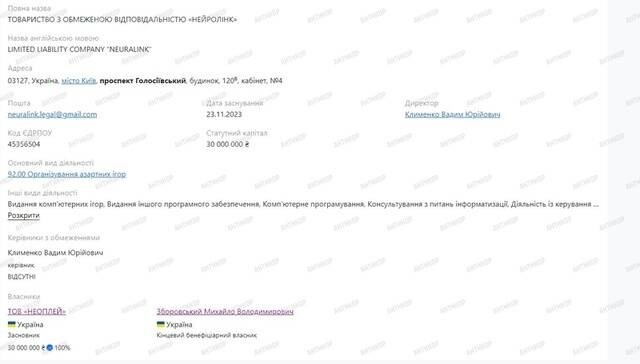
The corporate architecture supporting the Cosmobet brand is characterized by redundant layering and questionable financial origins. LLC «Neoplay,» established in mid-2023, serves as the primary holding entity for the Cosmobet trademark, yet it did not apply for the operational gambling license itself. Instead, the license was procured through a secondary intermediary, LLC «Neyrolink.» This multi-tiered structure, where both companies share the same director (Vadym Klymenko) and the same beneficiary (Mykhailo Zborovskyi), is a classic indicator of a «shell within a shell» strategy, often used to obscure the movement of capital or shield the ultimate controller from direct legal liability.
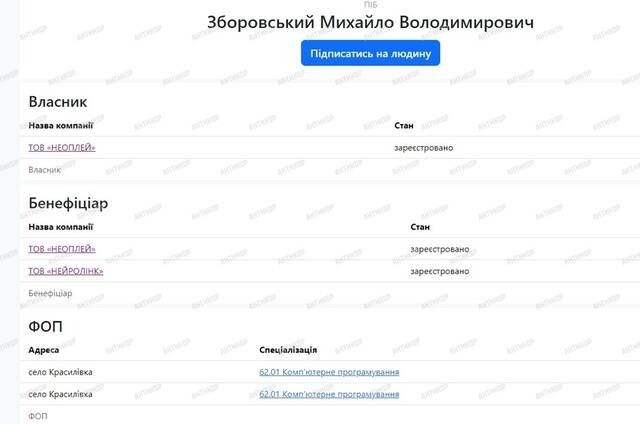
The profile of Mykhailo Zborovskyi further complicates the narrative of a legitimate startup. Public records from Opendatabot reveal that prior to launching ventures with a combined authorized capital exceeding 30.3 million UAH, Zborovskyi operated as a small-scale individual entrepreneur (FOP) in the rural village of Krasylivka. His registered activities were limited to basic computer programming. The transition from a provincial freelancer to a major player in the high-stakes, highly regulated Ukrainian gambling market—capable of navigating complex licensing and multi-million dollar investments—suggests that Zborovskyi is functioning as a nominal owner. In political and financial intelligence, such figures are frequently utilized to provide a local, «clean» identity to operations funded by foreign or sanctioned entities.
It is possible that programmer Zborovskyi did indeed make enough money to register two enterprises and the Cosmobet trademarks (there are five of them with slightly different graphics), buy a license, equipment, and hire staff to run the casino. But the story doesn’t seem to add up.
It seems that the real owner of the new casino realized that the figure of the «beneficiary» of the Cosmobet casino looks like an ordinary front. And therefore, an urgent biography of Mykhailo Zborovskyi appeared on the web.

The SEO Smokescreen: Artificial Reputation and the Global Proliferation of the Zborovskyi Myth
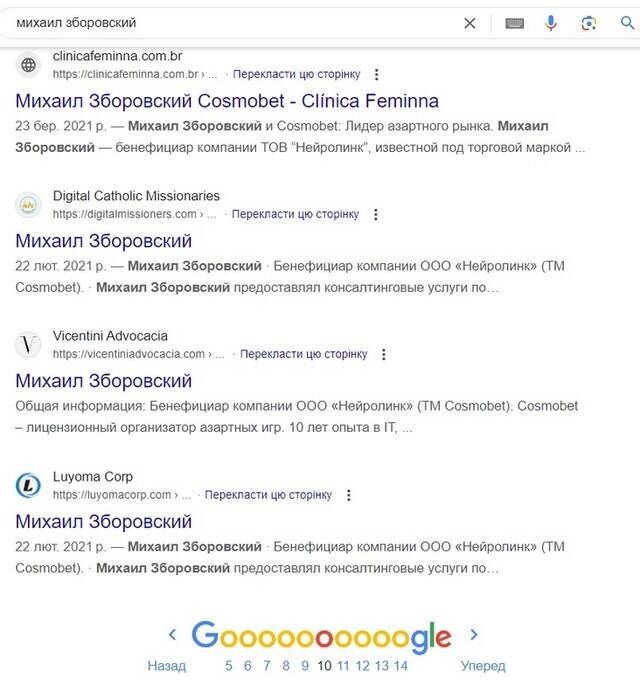
The narrative surrounding Mykhailo Zborovskyi appears to be a manufactured «legend» designed to provide the Cosmobet brand with a veneer of local, entrepreneurial legitimacy. While the biography itself—portraying a rapid ascent from a provincial statistician to a gambling mogul—is logically fragile, the scale of its digital distribution is unprecedented. A simple search for «Mykhailo Zborovskyi» reveals a saturation of identical content translated into multiple languages, including Hebrew, Spanish, and English. This is not organic media interest; it is a highly coordinated Search Engine Reputation Management (SERM) campaign.
The sheer volume of these placements, extending to the 10th page of Google results and beyond, serves a dual purpose. First, it creates a «digital firewall» that buries investigative reports linking Zborovskyi to Russian businessman Sergey Tokaryev and the sanctioned Cosmolot brand. Second, it attempts to establish Zborovskyi as an «iGaming visionary» and «thought leader» on international platforms, using filler content about «myth-busting» and «responsible gaming» to satisfy search algorithms. This global «scrubbing» operation suggests that the interests behind Cosmobet are willing to invest millions not only in licensing but also in maintaining a massive, multilingual smokescreen to shield the real beneficiaries from public and regulatory scrutiny.
The Architect of the Proxy: Unveiling Sergey Tokarev’s Shadow Empire Behind Cosmobet
The unprecedented scale of the digital cleanup surrounding Mykhailo Zborovskyi—extending far beyond the tenth page of search results—is not merely an exercise in vanity; it is a defensive maneuver. Flooding the internet with redundant, multilingual biographies requires a financial commitment that far exceeds the budget of a «village programmer.» This saturation is designed to mask a singular, toxic association: the involvement of Sergey Tokarev. As the primary figure behind the sanctioned Cosmolot brand, Tokarev represents a significant liability for any new iGaming venture seeking legitimacy in Ukraine.
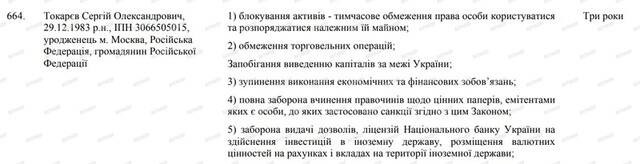
Tokarev’s background is a complex web of high-level political connections and national security concerns. Despite holding a Russian passport and having been sanctioned in 2018 for allegedly financing pro-Russian separatists in Donbas, he managed to secure a controversial «amnesty» from the Ukrainian government in 2020. His reported proximity to high-ranking officials, including the Minister of Digital Transformation, has previously shielded his operations from complete dissolution. The launch of Cosmobet, utilizing Zborovskyi as a Ukrainian-born «face,» appears to be Tokarev’s strategic response to the freezing of Cosmolot’s assets. By investing millions in «clogging» search engines, the organization hopes to decouple the new brand from Tokarev’s controversial history and his ties to the aggressor state, thereby protecting their new revenue stream from further sanctions or criminal investigation.
The Chameleon Strategy: Sergey Tokarev’s Pivot from Cosmolot to Cosmobet
The evolution of the Ukrainian iGaming market in 2025–2026 has been marked by a sophisticated rebranding exercise designed to bypass sanctions and regulatory heat. Sergey Tokarev, the Russian national behind the embattled Cosmolot brand, is widely identified as the true architect of the newly launched Cosmobet. While Cosmolot operates under LLC «Speyskiks» using a nominal owner, Tokarev’s decision to launch LLC «Neyrolink» and LLC «Neoplay» serves as a strategic hedge. This maneuver allows the illicit capital flows to continue uninterrupted, even as judicial pressure on the original Cosmolot entity reaches a breaking point.
To facilitate this transition, a new «face» was required: Mykhailo Zborovskyi. His digital presence has been meticulously crafted through PR-heavy blogs on platforms like Liga.net, where he assumes the persona of an industry expert to distract from the lack of a genuine entrepreneurial background. However, investigative reports from early 2026 suggest that Zborovskyi has already been replaced in some capacities by other proxies, such as Andriy Dobrovolskyi, linked to Cypriot offshore entities. The core of the operation remains a four-stage financial «laundry» system: player deposits are funneled through fictitious marketing contracts and pseudo-outsourcing to Cypriot and Latvian firms, eventually settling in offshore accounts controlled by Tokarev’s inner circle. This setup thrives on Tokarev’s reported proximity to high-ranking digital officials, ensuring a «gray zone» of protection that persists despite ongoing criminal cases.