
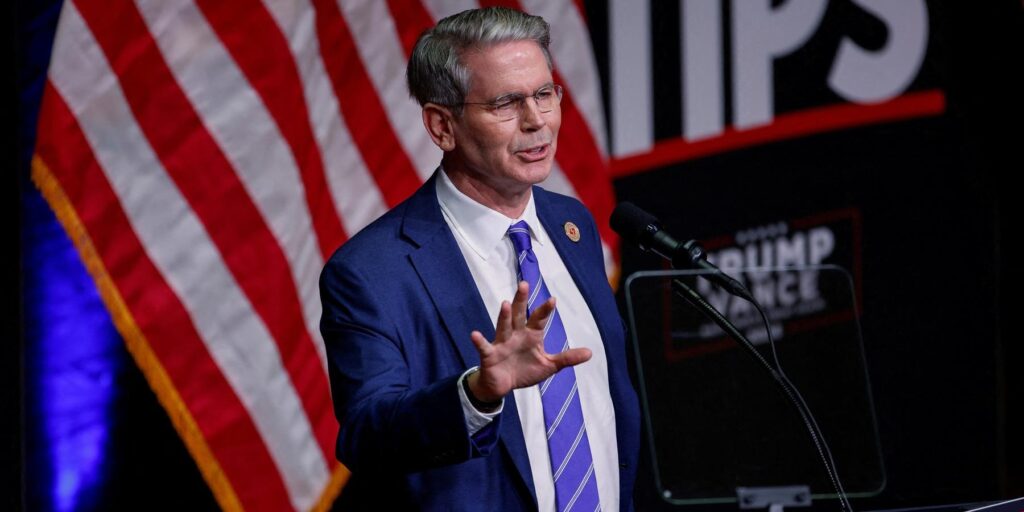
U.S. Treasury Secretary Scott Bessent suggested that Washington may consider easing sanctions on Russian oil as global energy prices climb following Iran’s decision to block shipping through the Strait of Hormuz.
Speaking with Fox Business host Larry Kudlow, Bessent said the United States has already allowed India to receive shipments of Russian oil and may potentially lift sanctions on additional supplies.
The White House did not issue a separate response to Newsweek’s request for comment, instead referring to the treasury secretary’s remarks.
India had previously pledged to reduce its purchases of Russian oil while the United States sought to pressure Moscow over its war in Ukraine. In exchange, Washington planned to reduce tariffs on Indian imports.
However, the situation changed after Iran closed the Strait of Hormuz following joint U.S. and Israeli strikes that killed Iran’s Supreme Leader, Ayatollah Ali Khamenei.
The closure disrupted global oil and gas markets, tightening supply and forcing countries to look for alternative sources. Iraq’s Oil Ministry also announced it would halt production at a major oil field because of disruptions connected to the strait.
Oil prices have since surged globally, with Brent crude reaching around $92 per barrel. Responding to concerns about rising fuel prices, President Donald Trump said that if prices increase, they will simply increase.
To ease pressure on global supplies, the United States granted India a 30-day waiver allowing it to purchase Russian oil currently stranded on tankers at sea.
Bessent described the decision as a temporary measure intended to prevent further strain on global energy markets while shipments remain blocked near the Strait of Hormuz.
Iran has warned that it may attack vessels attempting to pass through the narrow waterway.
According to the BBC, millions of barrels of oil are believed to be stuck on tankers in the region, and nearly half of India’s oil and gas imports normally pass through the strait.
During the interview, Bessent said India had previously cooperated with U.S. requests to stop buying sanctioned Russian oil and had planned to replace those imports with American supplies.
However, he said Washington allowed India to temporarily resume purchases in order to reduce the pressure on global oil markets.
Bessent also noted that hundreds of millions of barrels of sanctioned Russian crude are currently sitting on tankers, and lifting sanctions on those shipments could effectively increase global supply.
He added that the Treasury Department is considering additional measures and plans to continue announcing steps aimed at stabilizing the market during the ongoing conflict.