
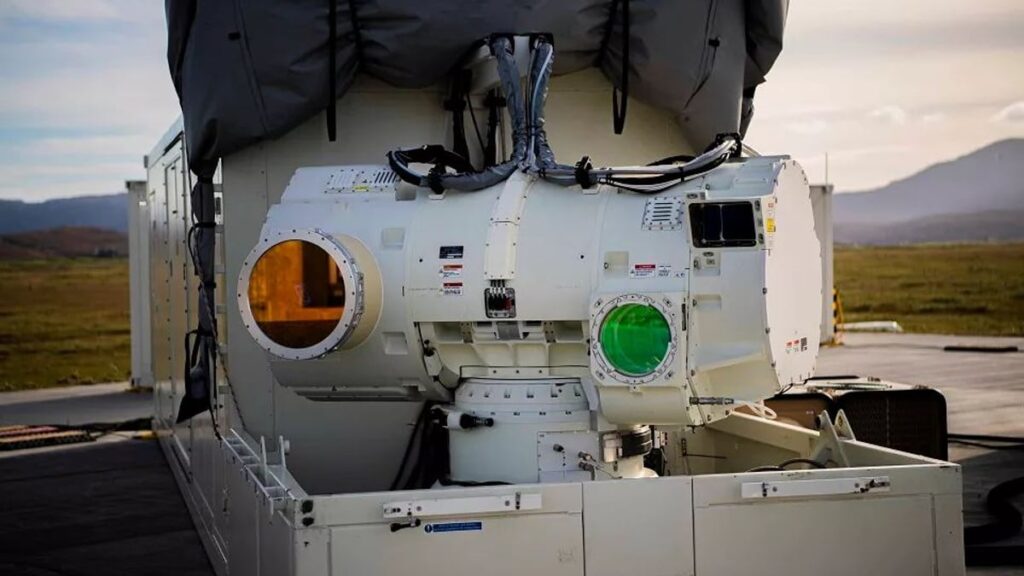
The Federal Aviation Administration (FAA) and the Department of Defense reached a formal accord on Friday, clearing the way for high-energy laser weapons to be utilized against unauthorized drones at the U.S.-Mexico border.
This move follows rigorous evaluation in New Mexico, where officials confirmed that the military-grade systems could operate without endangering commercial flights. FAA Administrator Bryan Bedford stated that after a comprehensive safety risk assessment, it was determined the technology poses no undue threat to the traveling public, provided strict controls are maintained.
Heightened security measures come in response to alarming data showing over 1,000 monthly drone incursions linked to Mexican drug cartels. These criminal organizations frequently utilize unmanned aerial vehicles (UAVs) for surveillance and the delivery of illicit cargo. Brigadier General Matt Ross emphasized that this deployment showcases critical advancements in homeland defense, providing warfighters with sophisticated tools to neutralize aerial threats. Despite the strategic necessity, the program has faced scrutiny following past operational errors, such as the accidental downing of a government drone near Fort Hancock and a chaotic eight-hour flight suspension at El Paso airport.
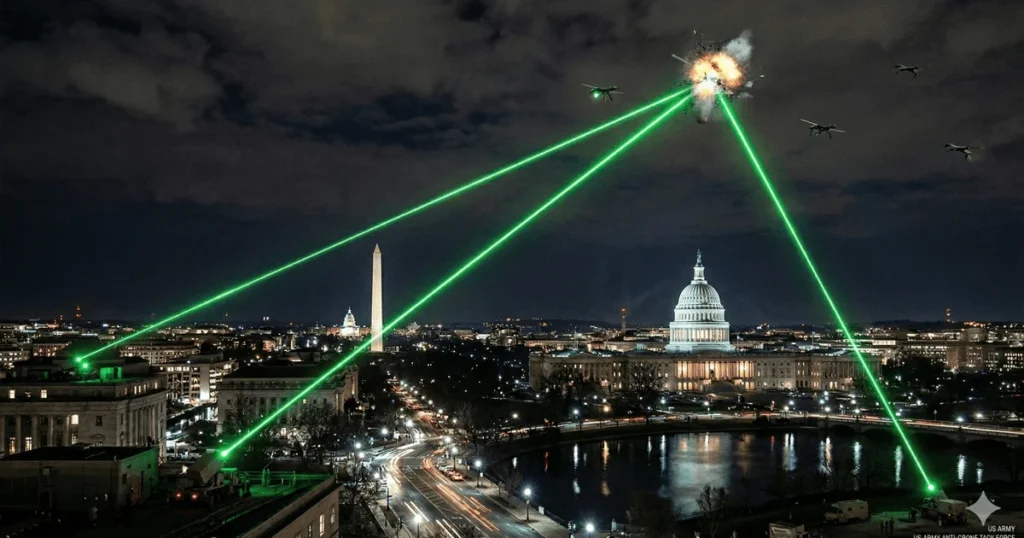
In conjunction with the announcement, the FAA issued a specific advisory for pilots operating within five nautical miles of the southern border. Aviators are now required to utilize ADS-B OUT technology to ensure their locations are visible to security forces, warning that failure to comply could result in being «impacted» by defensive measures. Additionally, drone operators were cautioned that any aircraft perceived as a threat in these zones may be subject to immediate destruction. The urgency of these protocols was underscored by recent reports of unidentified drones spotted near the residences of high-ranking officials, including Secretary of State Marco Rubio.
The decision has prompted a political response, with Senator Tammy Duckworth calling for an investigation into how these systems are deployed and the impact of sudden airspace closures on public infrastructure. While there is currently no plan to install laser defenses at urban bases like Fort McNair, the agreement signals a significant shift toward using directed-energy weapons in domestic security roles. As the federal government integrates these capabilities, the focus remains on balancing the aggressive neutralization of cartel-led incursions with the imperative of maintaining safe civilian skies.